
Stop! Don’t Get Shoulder Surgery Until You Try These 2 Simple Tests
If you’re struggling with persistent shoulder pain and your doctor is recommending surgery, stop. Before you go under the knife, here are two tests for shoulder pain before surgery; tests that could reveal the real source of your pain and save you from an unnecessary procedure.
70% of people with “shoulder pain” don’t actually have shoulder pain that stems from nerve issues in the neck or median nerve tension that radiates down to the shoulder. This is why traditional treatments like physical therapy, injections, and even surgery often fail to provide lasting relief.
You can identify these hidden causes yourself in just 5 minutes using two simple at-home tests. These screening methods work by creating a chain reaction through your nervous system, revealing whether your shoulder pain is actually coming from nerve compression or cervical spine dysfunction.
With just 5 minutes of testing, you can
- Discover if your “shoulder problem” is actually a nerve issue.
- Understand why previous treatments have failed.
- Avoid unnecessary surgery and its permanent consequences.
- Identify the actual root cause of your pain.
- Save thousands of dollars in medical bills.
- Get on the right treatment path immediately.
Quick Reference Box
- Total Time: 5 Minutes.
- Targets: Median nerve pathway, cervical spine mobility.
- Goals: Identify nerve tension, rule out referred pain, and determine the true pain source.
Test 1: Median Nerve Tension Screen

Purpose: This test reveals hidden nerve tension that causes nighttime shoulder pain and explains why you can’t sleep comfortably.
Equipment Needed: None.
How to Do It
- Stand and position your arm like a “teapot” or waiter carrying a tray.
- Straighten your elbow completely, then extend your wrist and fingers down toward the ground as far as possible.
- Maintain this position for 30 seconds, noting any pain, tingling, numbness, or tightness in your fingers, hand, forearm, bicep, shoulder, or neck.
- While holding the arm position, side-bend your head (bring your ear toward the opposite shoulder) to stretch the median nerve from neck to fingertips.
Sets: Hold each position for 30 seconds.
Tip: Pay attention to WHERE you feel symptoms, not just IF you feel them. Symptoms can appear anywhere from your fingertips to your neck, and any change when you add neck movement indicates positive nerve tension.
Test 2: Cervical Spine Mobility Screen
Purpose: This comprehensive neck assessment identifies restriction patterns that refer pain to your shoulder.
Equipment Needed: Chair.
Neck Flexion Test
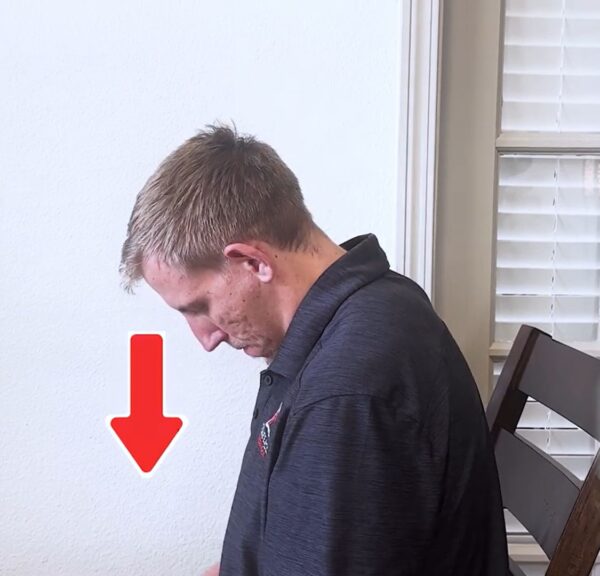
How to Do It
- Sit upright in a chair with good posture.
- Slowly bring your chin down toward your chest as far as comfortable.
- Hold for 15 seconds, noting any pain, tightness, or pulling sensations.
- Pay special attention to symptoms under your shoulder blades, neck, or upper traps.
Neck Extension Test

How to Do It
- From the same seated position, slowly look up toward the ceiling.
- Extend your neck as far as comfortable without forcing it.
- Hold for 15 seconds, checking for pinching, tightness, or tingling.
- Note if symptoms worsen or if you feel restricted movement.
Rotation Assessment

How to Do It
- Keep your shoulders level and slowly turn your head as far right as possible.
- Hold for 10 seconds, then return to the center.
- Repeat turning left, comparing the range of motion between sides.
- Document any stiffness, pain, or shoulder referral symptoms.
Side Bend Evaluation

How to Do It
- Keep shoulders level (imagine balancing books on both shoulders).
- Bring your right ear toward your right shoulder without lifting the shoulder.
- Hold for 15 seconds, then repeat on the left side.
- Compare sides for tightness, restriction, or referred shoulder pain.
Sets: Perform each movement once, holding for the specified times
Tip: Write down your findings immediately. Even subtle differences between sides or mild discomfort can indicate the source of your shoulder pain. If any movement reproduces or changes your shoulder symptoms, you’ve found a crucial clue.
What Your Results Mean
If either test produces pain, tingling, numbness, or changes in your shoulder symptoms, congratulations – you’ve just discovered why months or years of shoulder-focused treatment haven’t worked. Your pain is likely originating from nerve compression or cervical dysfunction, not structural shoulder damage.
This explains why surgery often fails or even makes things worse. When surgeons operate on a healthy shoulder to fix pain that’s actually coming from your neck or nerve pathways, they’re addressing the wrong problem entirely. Meanwhile, the real issue continues causing symptoms, and now you have surgical complications on top of it.
Before You Consider Surgery: The Essential Checklist
Surgery should be your absolute last resort, not your first option. Here’s what you must try first:
Address Contributing Factors
- Manage stress levels (emotional, physical, mental, relationship, work-related).
- Maintain a healthy, anti-inflammatory diet, and improve your sleep quality and duration.
- Stay physically active within your pain limits.
Find the Right Provider
- Seek someone who screens the entire kinetic chain, not just your shoulder.
- Ensure they understand nerve referral patterns.
- Choose a practitioner who identifies root causes, not just symptoms.
- Work with them for a full 6 months before considering surgical options.
The 6-Month Rule. Only consider surgery if you’ve addressed all contributing factors AND worked with a qualified provider who understands nerve referral patterns for at least 6 months without improvement. This gives your body adequate time to heal naturally while addressing the true source of your problem.
Decide What’s Best!
The great news is that nerve-related shoulder pain responds incredibly well to the right approach. Unlike structural damage, nerve tension and cervical dysfunction can often be entirely resolved with targeted treatment. You don’t have to live with this pain, and you certainly don’t need to rush into surgery.
If your tests revealed positive findings, you’ve just taken the most important step toward real recovery. You now know that your shoulder pain has a treatable cause that doesn’t require going under the knife.
Ready to get your life back without surgery?
About the Author: Dr. Joey Seyforth


