
3 Simple Exercises to Eliminate Bench Press Shoulder Pain
Are you tired of that nagging front shoulder pain every time you hit the bench? You’re not alone. Front shoulder pain during bench pressing is one of the most common complaints among lifters, and the standard advice of “just stop benching” is not only frustrating—it’s completely unnecessary.
Here’s the good news: your shoulder pain isn’t a life sentence, and you don’t have to give up your favorite exercise forever. We’ve got some powerful tips on how to fix bench press shoulder pain.
Most people think bench press shoulder pain is just a “shoulder problem,” but the truth is more complex. Your shoulder is a ball-and-socket joint that moves in every direction—like a golf ball sitting on a tee. When you experience that sharp pain in the front of your shoulder during the bottom position of your bench press, it’s actually the ball portion of your shoulder sliding forward and rubbing against sensitive tissues.
This creates a chain reaction of problems
- The bursa (fluid-filled sacs) become inflamed.
- Tendons and ligaments get irritated.
- Your rotator cuff and bicep tendon take a beating.
- The back of your shoulder becomes weak and unstable.
What if I told you that just 10 minutes of targeted exercises could dramatically reduce your bench press shoulder pain? These three simple movements address the root cause by creating mobility, activation, and stability in the correct sequence.
With just 10 minutes a day, you can
- Reduce front shoulder pain during bench pressing.
- Improve shoulder stability and strength.
- Enhance your overall pressing performance.
- Prevent future shoulder injuries.
- Get back to pain-free workouts.
- Build confidence in your bench press form.
Quick Reference Guide
Total Time: 10 Minutes
Targets: Anterior shoulder, posterior rotator cuff, lower trapezius
Goals: Mobility restoration, muscle activation, shoulder stability
Exercise Breakdown
Exercise 1: Banded Shoulder Posterior Mobilization
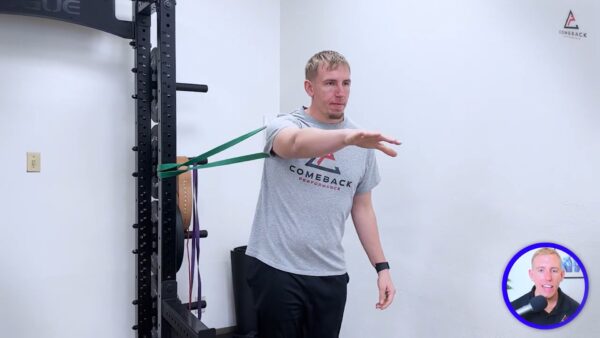
Purpose: Push the shoulder ball back into proper position to relieve pressure on the front shoulder tissues.
Equipment Needed: Resistance band, squat rack, or anchor point.
How to Do It
- Attach the band to a sturdy anchor point at shoulder height.
- Place the band over your affected shoulder, ensuring it pulls the shoulder backward.
- Move your arms through bench press motions—elbows back and forward.
- Only move through ranges that feel comfortable, never forcing into pain.
Sets: 3 sets of 15 repetitions.
Tip: You should feel immediate relief in the front of your shoulder as the band offloads those irritated tissues. If it hurts, reduce the range of motion.
Exercise 2: Prone I (Lower Trap Activation)
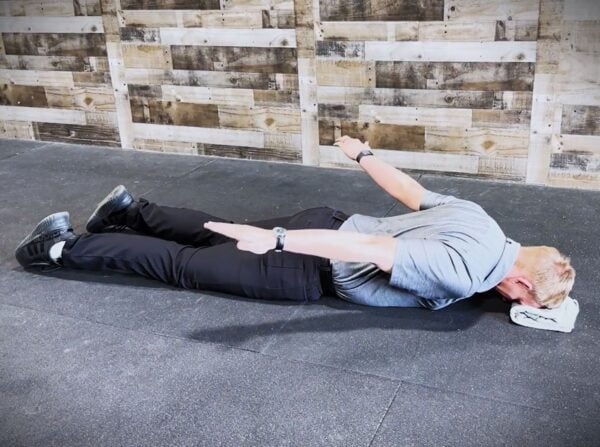
Purpose: Activate the often-weak muscles at the back of your shoulder to improve stability and blood flow.
Equipment Needed: Towel for head support (optional: 1-3 lb weights).
How to Do It
- Lie face down on the ground with your head resting on a towel.
- Place your arms by your sides, palms facing down.
- Lift your arms off the ground by squeezing your shoulder blades together.
- Hold each rep for 3 seconds before slowly lowering.
Sets: 3 sets of 10 reps with 3-second holds.
Tip: This exercise is harder than it looks! If it feels too easy, add light weights (1-3 lbs). Remember, this isn’t about getting “jacked”—it’s about activation and preparation.
Exercise 3: Banded Bench Press
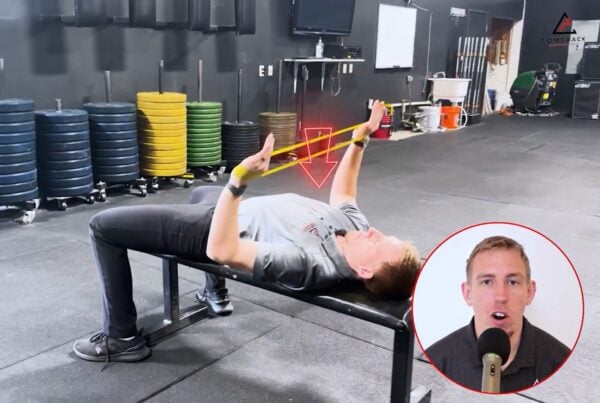
Purpose: Provide stability training that mimics the bench press while strengthening the posterior rotator cuff.
Equipment Needed: Circular resistance band.
How to Do It
- Lie on your back with the band around your wrists.
- Start in the top bench press position with arms extended.
- Pull the band apart while slowly lowering your arms for 3 seconds.
- Return to the starting position while maintaining band tension.
Sets: 3 sets of 8 reps with 3-second descents.
Tip: You should feel a burning sensation in the back of your shoulders—this means you’re activating the muscles that provide crucial stability during bench pressing.
Still Having Pain? Try These Modifications
Don’t panic if you’re still experiencing discomfort after completing the exercise sequence. Here are two modifications to keep you training while your shoulder heals
Modification 1: Neutral Grip Dumbbell Press. Switch from a barbell to dumbbells and rotate them to a neutral position (palms facing each other). This puts your shoulder in a less aggravating position while still allowing you to load up the weight.
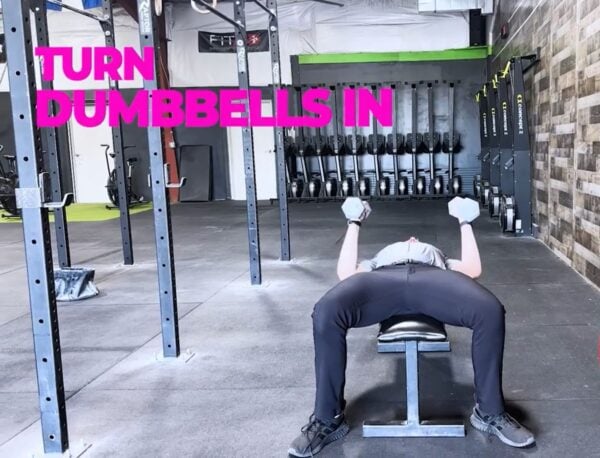
Modification 2: Floor Press. Perform your press lying on the floor instead of a bench. This limits how much your shoulder extends, which is often the primary trigger for front shoulder pain.
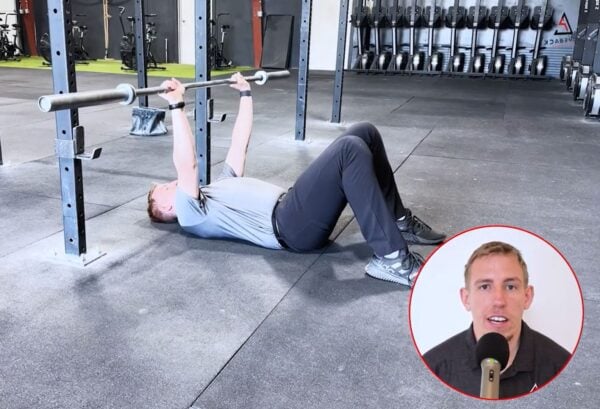
Start Pain-Free Benching!
Consistency is everything. These three exercises, performed in this exact order, target the mobility, activation, and stability your shoulders need. Most people notice some immediate relief, but the real magic happens when you make this a daily 10-minute routine.
After just one session, you should experience:
- Reduced tension in the front of your shoulder
- Better awareness of your shoulder blade muscles
- Improved stability during pressing motions
While these exercises provide powerful relief, lasting shoulder health requires addressing the root cause of your pain. True shoulder rehabilitation should eliminate pain, improve mobility, and build strength and stability—in that order. For a comprehensive, step-by-step approach tailored to your specific situation, consider working with a movement specialist who can identify the root cause of your pain and create a personalized plan for lasting relief.
Start with these three exercises today – your shoulders (and your bench press) will thank you.
About the Author: Dr. Joey Seyforth


