
Shoulder Impingement Relief: 3 Exercise Fixes That Actually Work
Shoulder impingement isn’t just a shoulder problem. It’s a complex chain reaction involving your shoulder blade, rotator cuff muscles, and overall shoulder mechanics working against each other instead of in harmony. When your supraspinatus muscle (one of the four crucial rotator cuff muscles) gets compressed between your shoulder and shoulder blade, it creates a domino effect. This compression happens during everyday movements like reaching across your body, lifting overhead, or even internal rotation movements – turning simple daily activities into painful ordeals.
But here’s the encouraging news: with just 10 minutes a day using these three targeted exercises, you can break this cycle and reclaim your shoulder function.
If you do these exercises diligently and properly,
- Create immediate space in your shoulder joint to reduce compression.
- Restore natural shoulder blade movement for pain-free overhead motion.
- Strengthen your rotator cuff to prevent future impingement episodes.
- Improve your daily function without avoiding activities you love.
- Reduce inflammation and promote healing through targeted movement.
- Build long-term stability to keep your shoulders healthy for life.
Quick Reference Guide
- Total Time: 10 Minutes.
- Targets: Supraspinatus muscle, shoulder blade mobility, rotator cuff strength.
- Goals: Create space, improve mobility, build stability.
Exercise Breakdown: Your 3-Step Shoulder Recovery Plan
Exercise 1: Banded Inferior Shoulder Mobilization
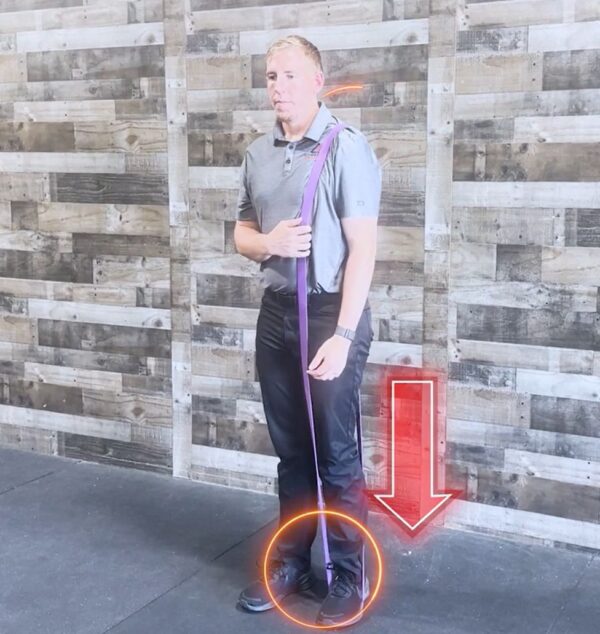
Purpose: Creates immediate space in the shoulder joint to decompress the impinged supraspinatus muscle and provide breathing room for natural movement.
Equipment Needed: Resistance band
How to Do It
- Place the resistance band around your affected shoulder, allowing it to pull downward.
- Slowly raise your arm forward and overhead while the band creates gentle traction.
- Move only to comfortable ranges – never force through pain.
- Focus on the feeling of space being created in your shoulder joint.
Sets: 3 sets of 15 repetitions
Tip: The band should feel like it’s gently “unloading” your shoulder. If you feel pinching or increased pain, reduce the range of motion and focus on the decompression sensation.
Exercise 2: Wall Slides

Purpose: Simultaneously improves shoulder blade mobility and shoulder joint movement while teaching these two components to work together harmoniously.
Equipment Needed: Wall
How to Do It
- Stand facing a wall with one foot slightly forward for better positioning.
- Place both hands flat against the wall at shoulder height.
- Slide your arms up the wall while leaning your chest forward.
- Feel your shoulder blades moving up and around as you create space in the shoulder joint.
Sets: 3 sets of 10 repetitions
Tip: This should feel incredibly good both during and immediately after the movement. The chest-forward lean is crucial for proper shoulder blade mechanics – don’t skip this component.
Exercise 3: Two-Position Banded Shoulder Flexion Hold
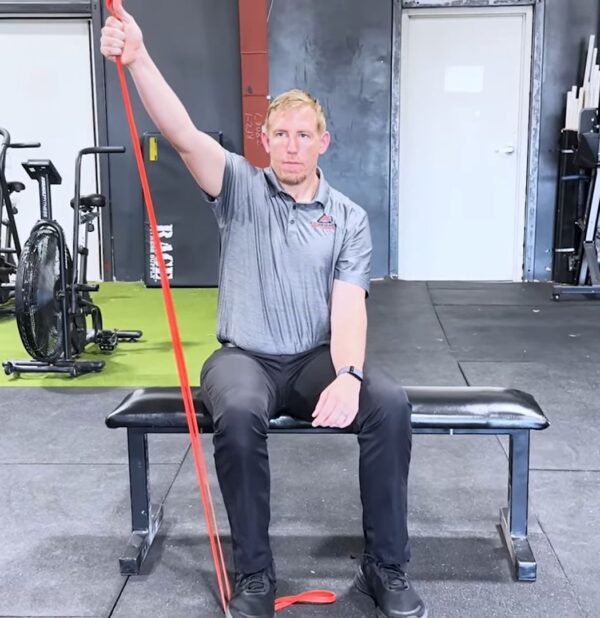
Purpose: Builds rotator cuff strength and endurance, specifically targeting the supraspinatus muscle to prevent future impingement episodes.
Equipment Needed: Resistance band, bench, chair.
How to Do It:
- Sit on a bench with the resistance band under your foot (same side as the working shoulder).
- Hold the band with thumb up and elbow straight, maintaining constant tension.
- Lift to chest level and hold for 5 seconds, then raise above head level for another 5 seconds.
- Alternate between these two positions while maintaining band tension throughout.
Sets: 2-3 sets of 30-50 seconds total
Tip: Your shoulder should be burning by the end – this intense but controlled fatigue is exactly what builds the endurance your rotator cuff needs. Stop if you feel sharp pain, but muscle fatigue is the goal.
Your Path to Permanent Shoulder Freedom
Consistency is your secret weapon. These three exercises work because they address the root cause of shoulder impingement. Within just a few sessions, you should experience increased range of motion, reduced morning stiffness, and the ability to reach overhead without that familiar pinching sensation. Many people report sleeping better and feeling more confident in their daily activities within the first week.
If you want to go beyond these exercises, you’ll need a guide. And we can guide you through the process to pain-free shoulders.
About the Author: Dr. Joey Seyforth


