
Stop ‘Shoulder Squeeze’ Syndrome: 3 Essential Drills for Instant Shoulder Relief
Have you ever been told to “pull your shoulder blades down and back” for better posture? If you’re dealing with persistent shoulder pain, this well-meaning advice might actually be making things worse. Welcome to what I call “shoulder squeeze syndrome” – a condition where constantly forcing your shoulder blades into the down-and-back position actually limits your natural shoulder movement and creates more pain. These drills for shoulder pain relief can bring an end to the discomfort you feel.
When you constantly squeeze your shoulder blades down and back, you’re preventing crucial movements like upward rotation. This creates a compression effect where the ball of your shoulder joint gets pinched between your shoulder blade and arm bone during overhead movements. The result? Impingement, inflammation, and that nagging pain that just won’t go away.
The good news is that you can start reversing shoulder squeeze syndrome today with just three targeted exercises. These movements will teach your shoulder blades to move naturally again, instantly reducing compression and restoring pain-free movement.
With just 5 minutes a day, you can
- Eliminate shoulder impingement by restoring natural upward rotation.
- Increase overhead reach without pain or restriction.
- Improve posture naturally through dynamic movement patterns.
- Reduce daily shoulder tension and stiffness.
- Prevent future shoulder injuries by building proper movement habits.
- Enhance sports and gym performance with unrestricted shoulder mobility.
Quick Reference Box
- Total Time: 5 Minutes.
- Targets: Shoulder blades, shoulder joint, thoracic spine.
- Goals: Restore scapular mobility, reduce impingement, and eliminate pain.
Exercise Breakdown
Exercise 1: Wall Slides for Upward Rotation

Purpose: Teach your shoulder blades to rotate upward naturally, breaking the down-and-back habit that causes impingement.
Equipment Needed: Wall.
How to Do It
- Stand facing a wall with one foot slightly in front of the other.
- Place your hands flat against the wall with forearms and elbows lifted off.
- Apply light pressure to the wall and slide your arms upward.
- At the top, allow your chest to come forward while maintaining wall contact.
Sets: 2 sets of 10 repetitions.
Tip: Focus on feeling your shoulder blades moving “up and around” rather than squeezing them together. This opposite movement is exactly what your shoulders need to heal.
Exercise 2: Windmill + Lift Off for Dynamic Control
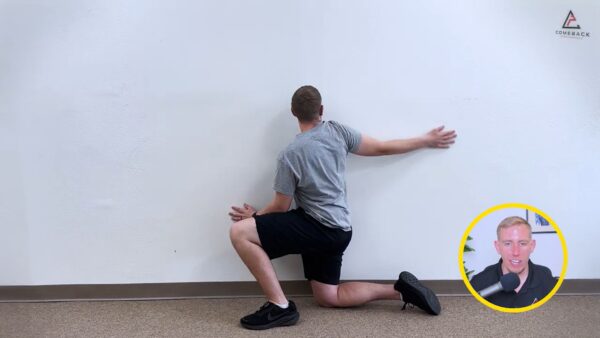
Purpose: Integrate your shoulder blade movement with your spine and hip, teaching your body to work as a coordinated team.
Equipment Needed: Wall.
How to Do It
- Get into a half-kneeling position with your hip touching the wall.
- Slide your arm up the wall in a rainbow pattern toward overhead.
- At the end range, lift your shoulder and arm off the wall while keeping your hip connected.
- Return to the starting position with control.
Sets: 12 repetitions on each side.
Tip: If you can’t lift your arm off the wall yet, that’s perfectly normal. Work within your comfortable range and gradually progress over time.
Exercise 3: Banded Scap Angels for Natural Movement
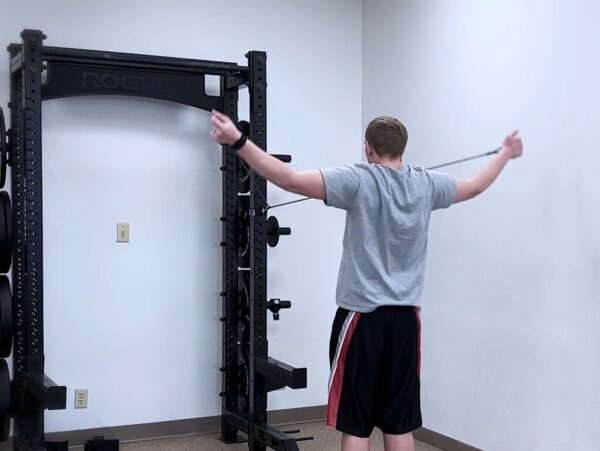
Purpose: Activate your shoulder blade muscles in multiple directions while promoting free, unrestricted movement patterns.
Equipment Needed: Resistance band and anchor point.
How to Do It
- Attach the band to a sturdy surface and grab with both hands.
- Pull the band back with straight arms toward your hips.
- Move your arms out to the sides and up, bringing your biceps toward your ears.
- Feel your shoulder blades moving up and around while engaging the back muscles.
Sets: 3 sets of 8-10 repetitions.
Tip: Move slowly and “own” each position. Quality movement is more important than speed – you’re reprogramming years of compensatory patterns.
You Can Eliminate The Pain.
While these exercises provide excellent immediate relief, persistent shoulder pain often requires a more comprehensive approach. You may need a personalized recovery strategy that addresses your specific movement patterns and underlying causes. It’s particularly important for anyone who has tried physical therapy, injections, or other treatments without lasting success. These three exercises work like a charm for your shoulder blades, gradually unlocking years of restricted movement and reducing pain with each repetition. Within just a few sessions, you should feel an increased range of motion and reduced compression during overhead movements. That constant tension you feel in your shoulders will begin to melt away, and the shoulder itself will begin to move freely.
For a complete, step-by-step approach to fixing your shoulder pain for good, consider working with a shoulder specialist who can identify and correct the root causes of your specific condition.
About the Author: Dr. Joey Seyforth


