
Shoulder Clicking and Popping? Here’s What It Means and How to Fix It!
Does your shoulder sound like bubble wrap every time you reach for something? You’re not alone. Shoulder clicking and popping are among the most frustrating complaints I hear as a physical therapist, and here’s the good news: most clicking shoulders aren’t broken; they’re just stuck. In this blog, I shared some practical exercises for shoulder popping and clicking.
While you might think the problem is just in your shoulder joint, the truth is more complex. Your shoulder is part of an intricate system involving your shoulder blade, rotator cuff, and surrounding muscles. When one piece isn’t working correctly, the entire system compensates, creating that annoying clicking sound and potential pain.
The problem extends far beyond just noise. Poor shoulder mechanics can lead to compensation patterns that affect your neck, upper back, and even your opposite shoulder. What starts as harmless clicking can evolve into chronic pain that limits your ability to reach overhead, sleep comfortably, or perform daily activities.
You can address the root causes of your shoulder clicking with just 15 minutes of targeted exercises daily. These movements work together to restore proper shoulder mechanics and eliminate the underlying issues causing your symptoms.
With this simple routine, you can
- Eliminate annoying clicking and popping sounds during daily movements.
- Reduce shoulder pain and stiffness that interferes with sleep and activities.
- Improve overhead reach for putting away dishes, reaching high shelves, or exercising.
- Restore proper shoulder blade movement that supports long-term joint health.
- Build shoulder stability that prevents future injuries.
- Sleep more comfortably without shoulder discomfort disrupting your rest.
Quick Reference Guide
- Total Time: 15 Minutes.
- Targets: Shoulder joint, shoulder blade, rotator cuff, posterior capsule.
- Goals: Increase mobility, reduce clicking/popping, improve stability.
The Root Causes of Shoulder Clicking
Before we dive into the exercises, understanding why your shoulder clicks helps you target the real problem. There are four main culprits.
- Tendon and Ligament Friction. Tight structures in the front of your shoulder create friction, leading to that grinding sensation when you move.
- Lack of Shoulder Stability. When your “ball and socket” joint moves too freely, it bumps into surrounding structures, creating noise and potential irritation.
- Rotator Cuff Weakness. Weak rotator cuff muscles can’t properly stabilize your shoulder joint, allowing excessive movement and clicking.
- Poor Shoulder Blade Mobility. If your shoulder blade doesn’t rotate upward properly (about 60 degrees), your arm bone gets pinched between structures, creating impingement and clicking.
The 5-Exercise Solution
Exercise 1: Banded Inferior Mobilizations with Flexion
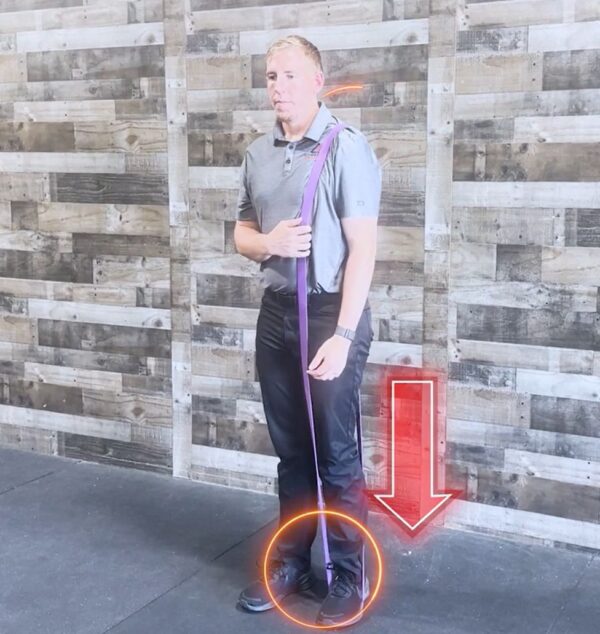
Purpose: Create more space in your shoulder joint and reduce compression that causes clicking.
Equipment Needed: Resistance band.
How to Do It
- Step on one end of a resistance band and place the other end over your shoulder.
- Allow the band to pull your shoulder downward gently.
- Slowly lift your arm straight forward (shoulder flexion) while the band provides traction.
- Move through your available range of motion without forcing into pain.
Sets: 2 sets of 12 repetitions.
Tip: Focus on the gentle traction feeling rather than forcing your arm higher. The band should create space, not resistance to your movement.
Exercise 2: Ball Posterior Capsule Mobilization
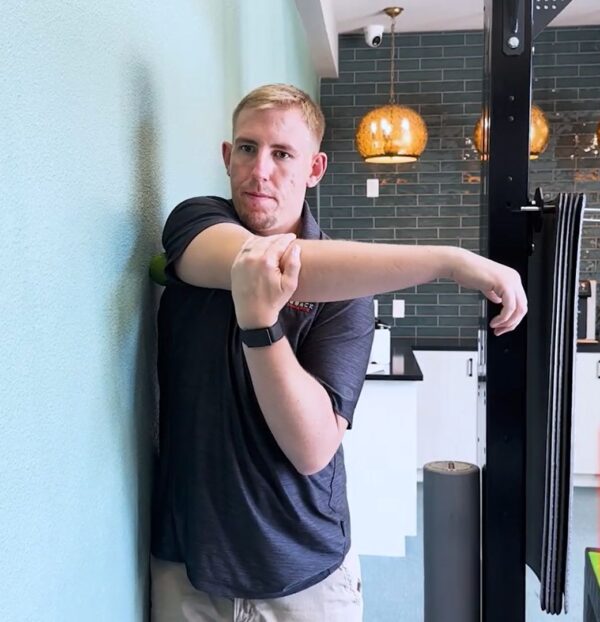
Purpose: Release tightness in the back of your shoulder that restricts cross-body and overhead movements.
Equipment Needed: Lacrosse ball or baseball, wall.
How to Do It
- Place the ball between your shoulder blade and the wall.
- Bring your arm across your body using your opposite hand to assist.
- Apply gentle pressure through the ball while moving your arm.
- Hold stretches briefly and move in and out of the position.
Sets: 15 repetitions each side.
Tip: Notice if one side feels significantly tighter than the other – this often correlates with the side experiencing more clicking and pain.
Exercise 3: Wall Slides
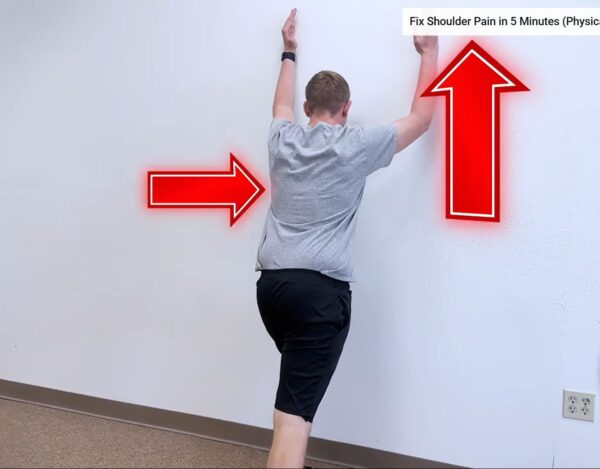
Purpose: Improve shoulder blade upward rotation and reduce front-of-shoulder compensation.
Equipment Needed: Wall.
How to Do It
- Stand with one foot in front of the other, facing a wall.
- Place both hands flat against the wall at shoulder height.
- Slide your arms up the wall while allowing your chest to move forward.
- Focus on feeling your shoulder blades rotate upward and around your ribcage.
Sets: 2 sets of 10 repetitions.
Tip: Think of wearing a tight shirt and trying to take it off – your shoulder blades need to move up and around to allow full arm elevation.
Exercise 4: Angels Over Cones

Purpose: Activate and strengthen the stabilizing muscles between your shoulder blades.
Equipment Needed: 3 small objects (cones, kettlebells, or books), exercise mat.
How to Do It
- Lie face down with three objects placed in an arc above your head.
- Relax your neck and upper shoulders into the mat.
- Lift your arms up and over each object without touching them.
- Control the movement both up and down for each repetition.
Sets: 3 sets of 5 repetitions.
Tip: You should feel a burn in your mid and lower traps. If you can’t clear the objects, modify by using shorter obstacles or removing some objects.
Exercise 5: Medicine Ball ABCs
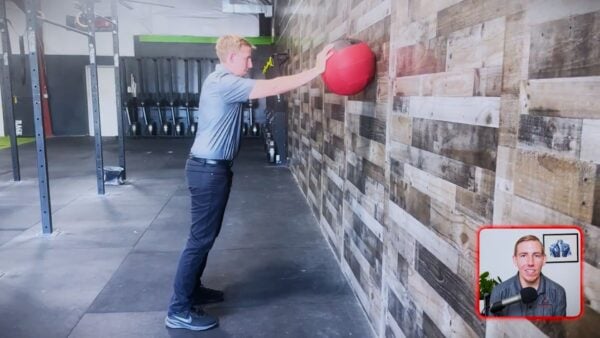
Purpose: Build rotator cuff endurance and shoulder stability through controlled movement patterns.
Equipment Needed: Medicine ball or small ball, wall.
How to Do It
- Hold the ball against the wall with your arm straight.
- Apply constant pressure to the wall.
- Slowly spell out the alphabet (A-Z) while maintaining pressure.
- Keep movements controlled and deliberate.
Sets: 3 sets of the complete alphabet.
Tip: Go slowly and focus on control rather than speed. Your shoulder should feel fatigued but not painful by the third set.
This Could Be Your Path to Clicking-Free Shoulders
These exercises work by gradually retraining your shoulder mechanics and building the strength and mobility needed for pain-free movement. Many people notice a reduction in clicking within the first week of consistent practice. After just a few sessions, you should notice less clicking during daily activities, improved comfort when reaching overhead, better sleep quality without shoulder discomfort, and increased confidence in using your arm.
While these exercises address the most common causes of shoulder clicking, some cases require personalized assessment and treatment.
About the Author: Dr. Joey Seyforth


