
How to Fix Frozen Shoulder: 3 Simple Exercises to Regain Full Movement in Minutes
Imagine waking up one morning and discovering your arm feels like it’s trapped in an invisible straitjacket! First, you reach for your coffee mug, and shooting pain stops you mid-motion, and you also try to put on a shirt, but your shoulder refuses to cooperate. Welcome to the frustrating world of frozen shoulder – a condition that doesn’t just affect your shoulder, but hijacks your entire quality of life. These simple exercises for frozen shoulder can bring a lot of relief if you do them consistently and correctly.
Frozen shoulder (adhesive capsulitis) is not just a shoulder problem. When your shoulder capsule becomes inflamed and tight, it creates a domino effect throughout your entire upper body. At this point, your neck compensates by overworking while your opposite shoulder takes on extra load. Your spine isn’t left out, as it starts moving differently to accommodate the limited range of motion.
The three exercises I’m about to share target not just your frozen shoulder, but the entire kinetic chain that’s been affected. You don’t need expensive equipment or hours of therapy – just 10-15 minutes of your day and a commitment to consistency.
With just 15 minutes a day, you can
- Regain overhead reach.
- Improve sleep quality.
- Restore cross-body movement.
- Reduce daily pain levels.
- Prevent future complications.
- Accelerate natural healing.
Quick Reference Guide
- Total Time: 15 Minutes.
- Targets: Shoulder capsule, thoracic spine, chest(for chest mobility).
- Goals: Improve external rotation and increase overall shoulder freedom.
Exercise Breakdown
Exercise 1: Dowel Abduction – Breaking Free from Side Limitations

Purpose: Safely restore your ability to lift your arm out to the side while using your healthy arm to guide the movement.
Equipment Needed: Broomstick, PVC pipe, or golf club.
How to Do It
- Place your affected hand on the bottom of the dowel with your palm open.
- Use your healthy arm to slowly guide your affected arm out to the side (abduction).
- Move only within your comfortable range – avoid pushing into sharp pain.
- If full abduction isn’t possible, work within a 45-degree range and gradually progress.
Sets: 3 sets of 15 repetitions.
Tip: Focus on gentle, controlled movement rather than forcing the range of motion. You should notice your arm reaching slightly higher with each set as things loosen up.
Exercise 2: Dowel External Rotation – Unlocking the Motion
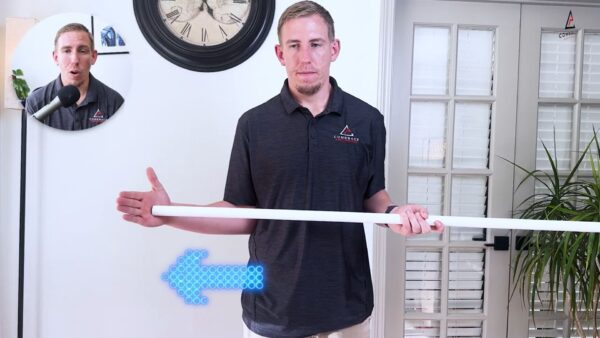
Purpose: Restore the crucial external rotation movement that’s essential for daily activities. These movements include combing your hair or reaching into your back pocket.
Equipment Needed: Same dowel from Exercise 1.
How to Do It
- Keep your affected hand on the bottom of the dowel with your elbow tucked at your side.
- Use your healthy arm to push your affected shoulder into external rotation.
- Hold the stretch position for 1-2 seconds before returning to the start.
- Move slowly and only within your pain-free range.
Sets: 3 sets of 15 repetitions.
Tip: Don’t be discouraged if your range is minimal initially – this is the most restricted movement in frozen shoulder, and any improvement is significant progress.
Exercise 3: Open Book – Freeing Your Entire Upper Body Chain
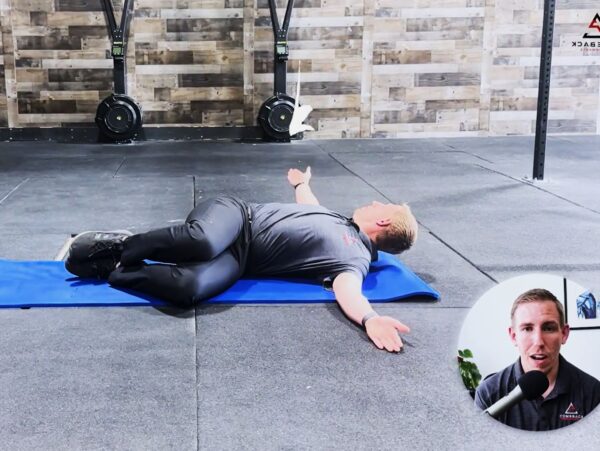
Purpose: Address the thoracic spine and chest tightness that develops as compensation for frozen shoulder, creating space for better shoulder movement.
Equipment Needed: None (floor or bed surface).
How to Do It
- Lie on your side with knees flexed and hands together in front of you.
- Keep your hips connected to the ground while rotating your top arm across your body.
- Follow your hand with your eyes as you “open the book” and stretch your chest.
- Return to the starting position with control.
Sets: 2 sets of 12 repetitions on each side.
Tip: Pay attention to which side moves better – this tells you which side needs more work. The frozen shoulder side will likely be more limited, but improving the healthy side can actually help offload the affected shoulder.
Your Journey to Recovery Starts Today
These three exercises work synergistically to address not just the frozen capsule, but the entire compensation pattern that’s developed around your injury. You can perform them anywhere, anytime, without special equipment or extensive time commitment. After completing just one session of these exercises, take a moment to move your shoulder in different directions. Many people report immediate improvements in comfort and slight increases in range of motion. This isn’t just psychological – you’re literally creating space and movement in tissues that have been locked down.
While these exercises provide powerful immediate relief and can significantly accelerate your recovery, you should seek a tailored approach that addresses your specific needs and movement patterns.
About the Author: Dr. Joey Seyforth


