
How to Fix Shoulder Pain: The 3-Step Comeback Process That Works Every Time
If you’re reading this, chances are you’ve been dealing with nagging shoulder pain that’s making simple daily activities feel impossible. Maybe you can’t sleep on your side anymore, struggle to reach overhead, or wince every time you try to work out. You’ve probably tried the typical recommendations – ice, rest, basic stretches – and they either don’t work or only provide temporary relief. In this blog, you’ll find proven steps to fix chronic shoulder pain without surgery.
The problem isn’t that your shoulder is “just getting old” or that you need surgery. The real issue is that traditional healthcare takes a cookie-cutter approach that treats symptoms instead of addressing the root cause.
Your shoulder doesn’t work in isolation. It’s part of an intricate system that includes your neck, thoracic spine, and shoulder blade. When one area becomes restricted or weak, it creates a domino effect that puts excessive stress on your shoulder joint. This is why that “frozen shoulder” diagnosis or rotator cuff tear might actually be stemming from nerve compression in your neck or restricted movement in your upper back.
Here’s what we’re going to solve in the next 10 minutes: You’ll learn the exact 3-step process that has helped over 1,000 people eliminate their shoulder pain, including people who had tried physical therapy, chiropractic care, massage, and even considered surgery.
You’ll likely be able to do the following when you’ve consistently completed this 3-step process.
- Sleep through the night without shoulder pain waking you up.
- Reach overhead without wincing or compensation patterns.
- Return to your favorite workouts and activities pain-free.
- Eliminate the constant ache that follows you throughout the day.
- Build bulletproof shoulders that can handle anything life throws at them.
- Avoid unnecessary imaging, injections, or surgical procedures.
Quick Reference Guide
- Total Time: 15 minutes daily.
- Targets: Shoulder joint, shoulder blade, neck, and thoracic spine.
- Goals: Eliminate pain, restore full range of motion, build long-term resilience.
The 3-Step Comeback Process That Actually Works
Step 1: Identify the Root Cause (The Clinical Audit)
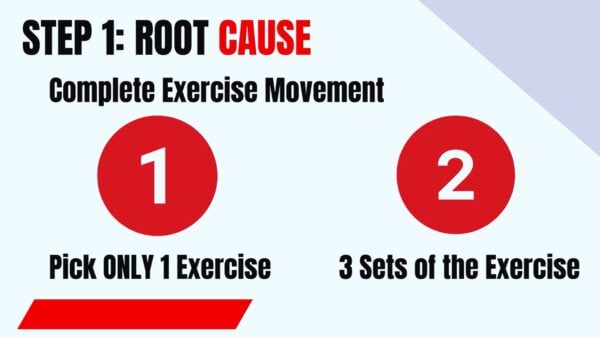
Purpose: Discover what’s actually causing your shoulder pain instead of just treating symptoms.
Equipment Needed: None – just your body and attention to detail.
How to Do It
- Perform trigger movement tests – Move your arm through basic ranges of motion (forward, overhead, behind your back) and note exactly where you feel pain or stiffness.
- Compare both shoulders side by side – Look for differences in how each shoulder moves and feels.
- Test your neck and upper back – Turn your head, look up and down, and arch your upper back to see if these movements reproduce your shoulder symptoms.
- Apply corrective movement – Based on what you found, perform a targeted exercise for 3 sets.
Sets: Complete this assessment process once, then retest after your corrective exercise.
Tip: Pay attention to whether your pain comes from the shoulder itself, radiates from your neck, or occurs when your shoulder blade doesn’t move properly. This detective work is crucial for lasting results.
Step 2: Eliminate the Pain (Custom Corrective Plan)
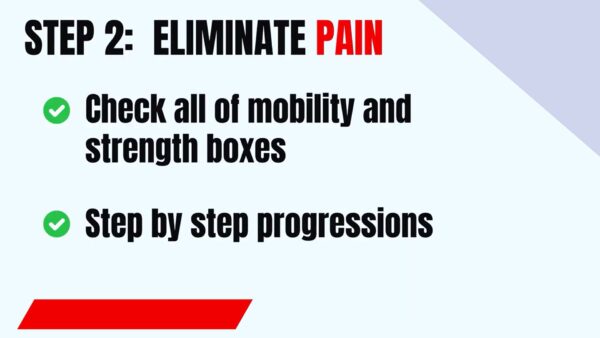
Purpose: Use the right exercises at the right intensity to eliminate your shoulder pain systematically.
Equipment Needed: Varies based on your specific needs (resistance bands, light weights, or bodyweight only).
How to Do It
- Start with mobility work – Address restrictions in your neck, upper back, and shoulder blade that were identified in Step 1.
- Progress to stability exercises – Strengthen the muscles that support proper shoulder mechanics.
- Adjust the three key variables – The volume (sets/reps), frequency (how often), and load (resistance) based on how your shoulder responds.
- Retest your trigger movements daily – Use the same tests from Step 1 to track your progress.
Sets: Typically 2-3 exercises, 2-3 sets each, performed daily with modifications based on your response.
Tip: Think of exercise like medicine – the correct movements at the right dosage heal, but guessing can make things worse. Start conservatively and progress based on how your shoulder feels the next day.
Step 3: Bulletproof Your Shoulders (Long-Term Resilience)
Purpose: Build shoulders that can handle all of life’s activities without fear of re-injury..
Equipment Needed: Progressive resistance (bands, weights, or gym equipment).
How to Do It
- Focus on capacity building – Gradually increase your shoulder’s ability to handle load and repetitive movements.
- Incorporate multi-directional strengthening – Train your shoulders in all planes of motion, not just forward and back.
- Add real-world movement patterns – Practice lifting, reaching, throwing, and carrying in ways that mimic your daily activities.
- Maintain the habits that got you pain-free – Continue mobility work even as you focus more on strength.
Sets: 3-4 exercises, 3-4 sets each, 3-4 times per week with progressive overload.
Tip: Only enter this phase after your pain is completely gone (usually 2-3 months). Building strength on top of dysfunction will create stronger dysfunction.
Your Shoulder Recovery Starts Today
The beautiful thing about this process is that you’ll often see improvements immediately after your first corrective exercise session. Your shoulders will move better, feel less stiff, and you might even sleep better that very night. Fifteen minutes of targeted movement daily will transform your shoulders faster than sporadic hour-long sessions. The key is addressing the root cause systematically, not just chasing symptoms.
While this framework gives you the roadmap, working with someone who can guide you through the specific assessments and exercise progressions will accelerate your results dramatically. Let’s talk!
About the Author: Dr. Joey Seyforth


