
Fix Rhomboid Pain: Get Rid of Shoulder Blade Pain in Just 10 Minutes Daily
Are you experiencing a nagging ache between your shoulder blades that makes it impossible to focus at work? Or is it a burning sensation that creeps up during long meetings or while driving? This could be Rhomboid pain that affects millions of people daily, yet most don’t know how to address it effectively. I shared four powerful at-home exercises for rhomboid pain. Start these and fix the pain!
Because…
The pain you’re feeling between your shoulder blades is often part of a much larger chain reaction involving your entire upper body. When your thoracic spine (upper back) becomes stiff from hours of desk work, your rhomboid muscles – those diamond-shaped muscles between your shoulder blades – start working overtime to compensate.
Think of it this way: when your upper back can’t move properly, your shoulder blades become the heroes trying to save the day. But heroes get tired, and tired muscles hurt. The solution isn’t just to massage the sore spot – it’s to address the entire system that’s causing the overwork in the first place.
To begin the fixing process, set aside at least ten minutes daily.
Quick Reference Guide
- Total Time: 10 Minutes.
- Targets: Rhomboids, thoracic spine, shoulder blade mobility, and postural muscles.
- Goals: Pain reduction, improved mobility, and postural strengthening.
Exercise Breakdown
Exercise 1: Foam Roll Thoracic Extension
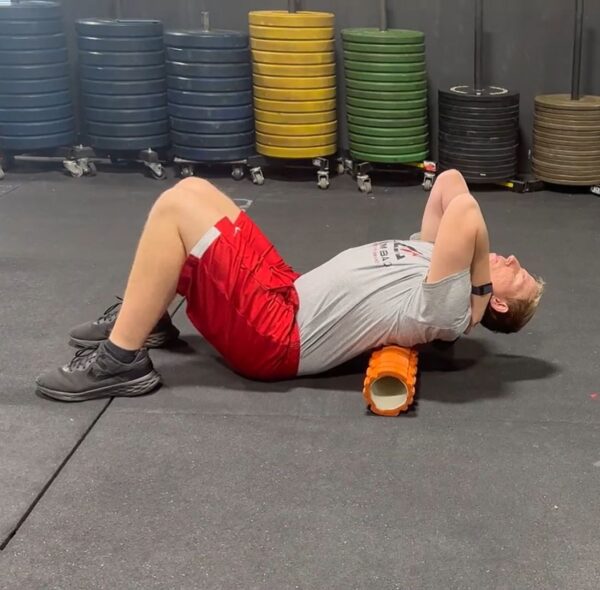
Purpose: Improve mobility in your thoracic spine to reduce the workload on your overactive rhomboid muscles.
Equipment Needed: Foam roller, optional 5-pound weight plate.
How to Do It
- Place the foam roller under your upper back and lie down with your knees bent.
- Hold the weight plate behind your head (or cross your arms over your chest).
- Keep your ribs down and pressed into the ground while extending backward over the roller.
- Hold for a deep breath in and out, then slide up to work the next segment of your spine.
Sets: 2-3 rotations through your entire thoracic spine.
Tip: You should not experience pain during this exercise – popping sounds are okay, but stop if you feel sharp discomfort.
Exercise 2: Banded Tree Hugs
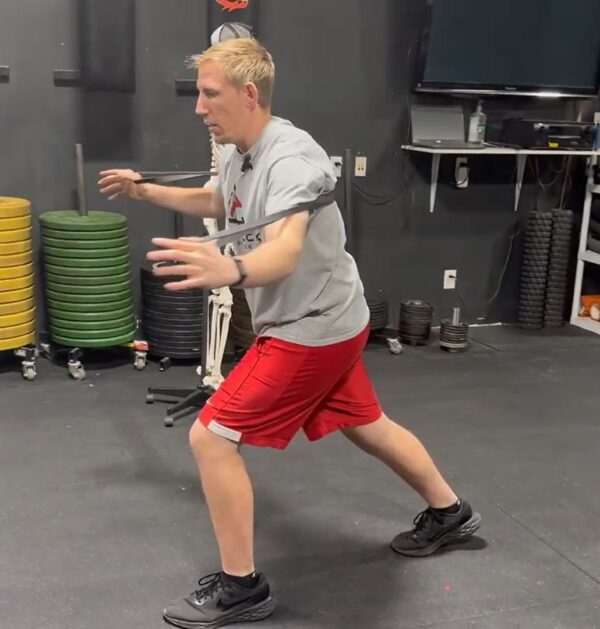
Purpose: Create freedom of movement through the shoulder blade region and allow your rhomboids to relax into their natural range of motion.
Equipment Needed: Resistance band.
How to Do It
- Place the band behind you, positioned underneath your shoulder blades.
- Step one foot forward into a lunge position.
- Imagine hugging a large tree in front of you and reaching your arms up and around.
- Allow your shoulder blades to move up and around naturally – don’t force the motion.
Sets: Hold for several seconds, repeat 8-10 times.
Tip: This should feel like a gentle stretch – let your shoulder blades move freely rather than trying to control them.
Exercise 3: Side Lying Open Book

Purpose: Work on rotational mobility in your shoulders, upper back, and neck to complement the extension work from exercise one.
Equipment Needed: None
How to Do It
- Lie on your side with knees bent up toward your chest.
- Place your hands together in front of you.
- Rotate your top arm and torso, following your hand with your eyes.
- Go as far as your body allows without forcing, then return to the start.
Sets: 8-10 rotations each side.
Tip: For higher back mobility, bring your knees up even higher toward your chest before rotating.
Exercise 4: Banded Pull Apart
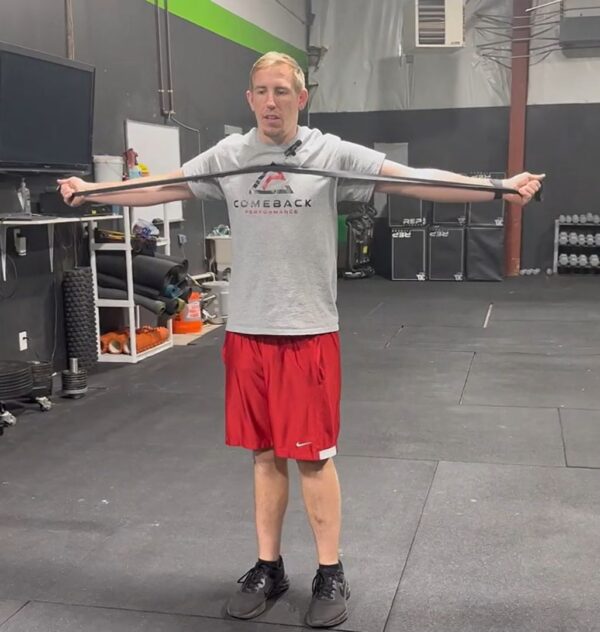
Purpose: Build strength in your rhomboids and middle trapezius muscles so they can handle daily activities without becoming overworked.
Equipment Needed: Resistance band.
How to Do It
- Hold the band with your arms extended in front of you, palms facing up.
- Pull the band apart by squeezing your shoulder blades together.
- Hold for 2-3 seconds, focusing on the muscles between your shoulder blades.
- Slowly return to the starting position with control.
Sets: 12-15 repetitions, holding each squeeze for 2-3 seconds.
Tip: You should feel a burning sensation in your upper back muscles – if not, hold longer or use a band with more resistance.
Your Path to Pain-Free Living Starts Today
These four exercises work synergistically – the mobility work prepares your spine for movement, while the strengthening exercises ensure your muscles can handle your daily demands without becoming overloaded. Working with a shoulder specialist can accelerate your results and provide personalized modifications if you’re dealing with chronic pain or want to dive deeper into correcting your posture and movement patterns.
Ready to say goodbye to that nagging pain between your shoulder blades?
About the Author: Dr. Joey Seyforth


