
Fix The Shoulder Pain Radiating Down Your Arm With These Exercises
If you’re an active adult over 40 experiencing shooting pain, numbness, or that burning line down your arm while driving or working at your computer, read this article to the end. Why? The real culprit might not be where you think.
When pain radiates down your arm, it’s almost never just a shoulder problem. Your nervous system is involved, and until you address the entire interconnected system, you’ll keep bouncing between temporary relief and frustrating flare-ups.
Quick Reference Box
- Total Time: 10 Minutes
- Targets: Neck nerves, first rib, thoracic spine, shoulder blade, median nerve
- Goals: Reduce nerve irritation, improve mobility, eliminate radiating pain
Before you start, do these two essential tests.
Test 1: Median Nerve Tension Assessment
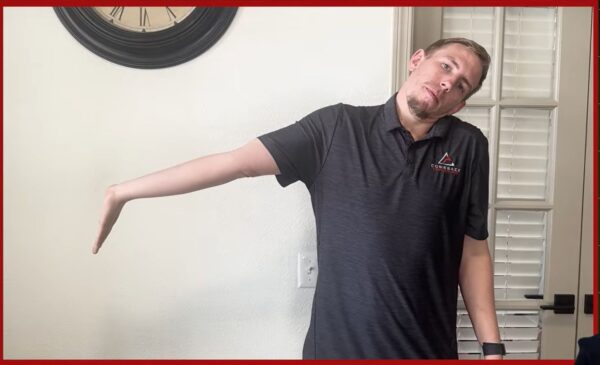
Purpose: Determine if your median nerve is contributing to your arm symptoms.
Equipment Needed: None
How to Do It
- Stand tall with your affected arm extended out to the side in a “waiter” position.
- Extend your elbow, wrist, and fingers down toward the ground until you feel light tension.
- From that position, gently tilt your head away from the extended arm, then back to center.
- Pay attention to any changes in tingling, burning, or familiar radiating pain.
What to Look For: If this recreates or changes your symptoms, your nerves are definitely involved in your pain pattern.
Test 2: Quick Neck Screen
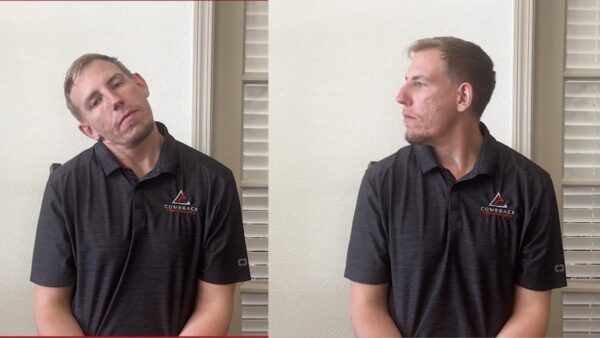
Purpose: Assess how neck movement affects your shoulder and arm symptoms.
Equipment Needed: None
How to Do It
- Sit or stand with good posture.
- Slowly turn your head right as far as comfortable, and return to the center.
- Turn your head left, return to the center.
- Gently tilt your right ear toward your right shoulder, and return to center.
- Tilt your left ear toward your left shoulder.
What to Look For: Note if any direction recreates your shoulder/arm pain or feels significantly tighter than the other side.
Exercise 1: Belt Rib Mobilizations

Purpose: Free up the compressed space where your nerve bundle passes over the first rib
Equipment Needed: Belt or dog leash
How to Do It
- Loop the belt over your painful shoulder across your upper trapezius muscle.
- Cross the belt in front of you and grab both ends with your hands, pulling downward to create pressure.
- Keeping that downward pressure, slowly tilt your neck down and toward your armpit, then up and away at a diagonal.
- Move smoothly in and out of this arc for the prescribed repetitions.
Sets: 15 slow repetitions.
Tip: You should feel pressure on top of your shoulder and mild stretch along your neck – no aggressive burning or zapping down your arm.
Exercise 2: Median Nerve Glides
Purpose: To get your median nerve sliding smoothly instead of staying stuck and irritated.
Equipment Needed: None
How to Do It
- Stand tall with your arm in the same “waiter” position from the test.
- Extend your elbow, wrist, and fingers toward the ground until you feel light nerve tension.
- From that position, gently tilt your head away from your arm, then back to center.
- Move in and out of this range like gentle flossing, not aggressive stretching.
Sets: 8 – 10 repetitions.
Tip: If symptoms increase, you’ve pushed too far and if they decrease, you’ve found the right range.
Exercise 3: Banded Wall Open Books
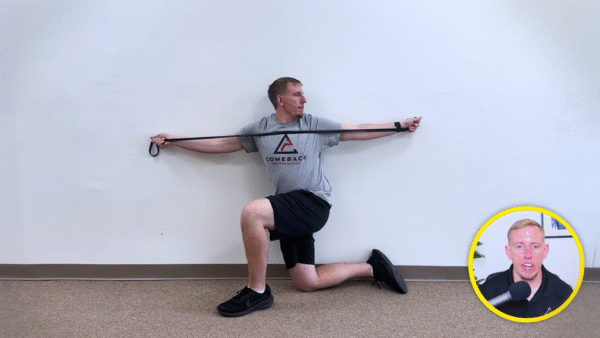
Purpose: Free up your upper back and shoulder blade mobility so your neck and nerves aren’t under constant tension.
Equipment Needed: Light resistance band, wall.
How to Do It
- Anchor the band at chest height next to a wall and kneel beside the wall.
- Hold the band straight out in front with both hands, arms extended.
- Keeping your hips facing forward, slowly rotate your chest and arms away from the wall like opening a book.
- Let your eyes follow your hands, pause briefly at the end range, then return to the start.
Sets: 8-10 slow repetitions on each side.
Tip: Motion should come from your upper back and ribs, not from cranking your lower back. Note if one side opens up more than the other.
Real Results: Sarah’s Success Story
Sarah, an active woman who lifts regularly, came to us with the exact pattern described above – burning a referral into her bicep when driving and trying to sleep. She couldn’t perform shoulder raises, presses, or push-ups without triggering severe symptoms.
“I couldn’t do what I used to do without getting pain like shoulder raises, presses, anything that would involve push-ups. The burning is gone, which is huge.”
This transformation happened when we addressed her entire system instead of just focusing on her shoulder joint.
What’s Your Action Plan Moving Forward?
Use this exercise combination 3-5 days per week before workouts and anytime your shoulder and arm symptoms flare from driving, desk work, or sleep. The beauty of this approach is that you’re not just treating symptoms, you’re addressing the root mechanical dysfunction in your entire kinetic chain.
For those ready to go deeper and get a complete, tailored approach to permanently resolving shoulder and nerve-related arm pain, the next step is working with a specialist. Get in touch.
About the Author: Dr. Joey Seyforth


