
The Complete 4-Phase Bicep Tendinitis Recovery Plan: From Pain to Heavy Pressing
If the front of your shoulder and bicep lights up every time you bench press, overhead press, do chin-ups, or row, you’re not alone. Bicep tendinitis isn’t just a bicep problem. Your shoulder blade positioning, upper back mobility, neck alignment, and nerve function all create a chain reaction that either supports or sabotages your bicep tendon. When these systems aren’t working together, your bicep tendon becomes the overworked hero trying to stabilize everything—and eventually, it breaks down.
With just 15-20 minutes a day following a strategic 4-phase plan, you can break this cycle permanently and get back to lifting without fear.
Quick Reference Protocol
- Total Time: 15-20 Minutes Daily
- Targets: Bicep tendon, shoulder blade mechanics, rotator cuff stability
- Goals: Pain elimination, movement restoration, and rebuild strength.
The Exercises
Exercise 1: Banded Scap Angels
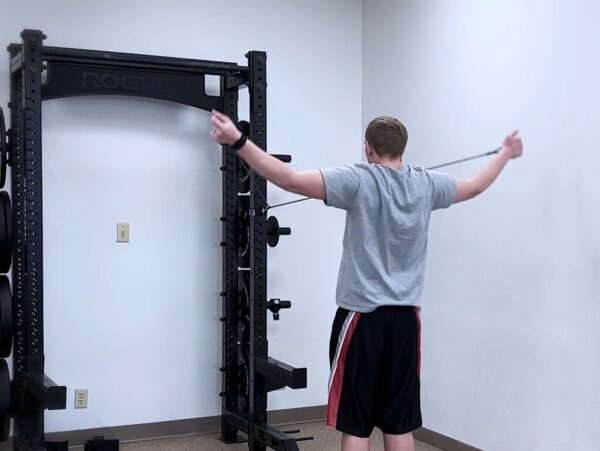
Purpose: To teach your shoulder blades to move up and around, creating space for the bicep tendon.
Equipment Needed: Light resistance band.
How to Do It
- Hold the band with arms wide, creating light tension.
- Slowly raise arms overhead while pulling the band apart.
- Focus on squeezing shoulder blades together and down.
- Lower with control, maintaining band tension.
Sets: 2 sets of 10-12 reps, 3-5 days per week.
Tip: This addresses the most neglected aspect of shoulder rehab, the foundation where your shoulder sits. So do it properly.
Exercise 2: Crab Rocks
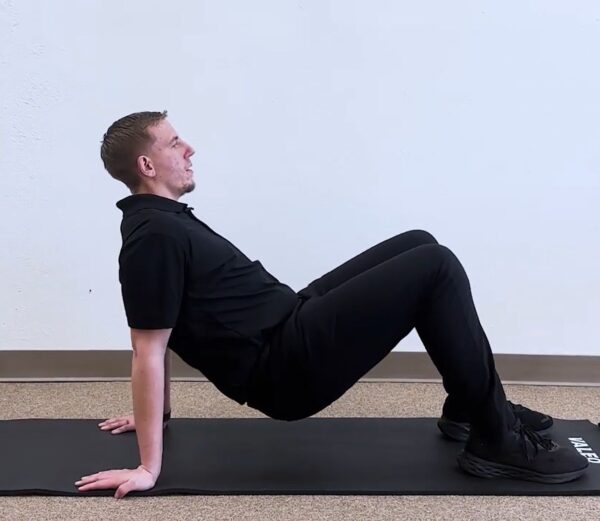
Purpose – To provide closed-chain loading through your shoulder in a safer range.
Equipment Needed: None.
How to Do It
- Sit with hands behind you, feet on the floor, hips low (mini crab position).
- Gently rock yourself forward and back using your shoulders.
- Keep movements small and controlled and focus on feeling the muscles around your shoulder blades working.
Sets: 2 sets of 8-10 rocks, daily.
Tip: Start with tiny movements as this exercise builds stability through motion.
Exercise 3: The 2-Position Banded Shoulder Flexion Holds
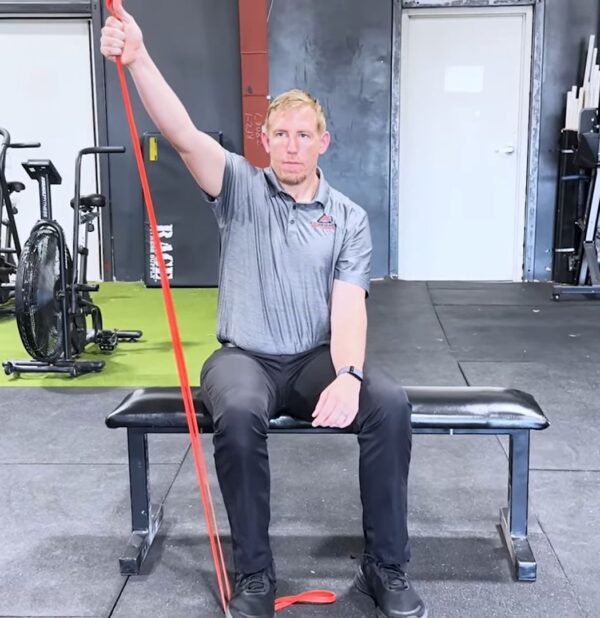
Purpose: Give the bicep tendon controlled, low-level load in better positions.
Equipment Needed: Light resistance band.
How to Do It
- Step on the light band, thumb pointing up.
- Hold your arm at 45 degrees for 5 seconds.
- Move to shoulder height and hold for 5 seconds.
- Never let pain spike above the yellow zone (2-4/10).
Sets: Do 3 sets of 5-second holds at each position.
Tip: Position yourself properly.
Exercise 4: Shoulder Taps
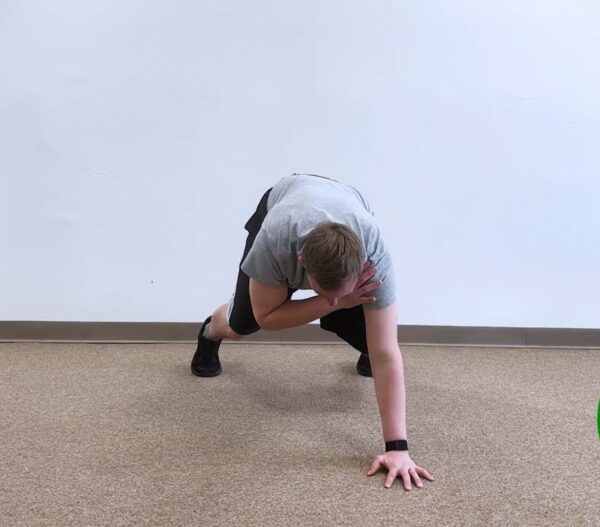
Purpose: Build anti-rotation strength and closed-chain shoulder stability.
Equipment Needed: None.
How to Do It
- Get into plank position (or elevated plank if needed).
- Alternate tapping each shoulder while keeping the body stable.
- Minimize hip movement and rotation.
- Focus on core and shoulder stability.
Sets: Do 2 sets of 10 taps per side.
Tip: If regular planks are too challenging, elevate your hands on a bench or box.
The Pain Traffic Light System
- Red Zone (6-10/10): Stop and adjust immediately
- Yellow Zone (2-4/10): Productive training zone—proceed with caution
- Green Zone (0-1/10): Full speed ahead
Tip: You can test your limits, but don’t get greedy overnight. It’s the consistent progress that beats aggressive jumps.
This Is Your Path Forward
The difference between those who overcome bicep tendinitis and those who remain stuck is having the right systematic plan. Your shoulder, shoulder blade, upper back, neck, and nerves all contribute to how that tendon feels day-to-day. When you align these systems and progress through the four phases with smart pain rules, that’s when you finally get back to benching, pressing, chin-ups, and rows without fear. Consistency with this 15-20 minute daily protocol will move you systematically from pain to performance.
About the Author: Dr. Joey Seyforth


