
Get Rid of Stubborn Shoulder Muscle Knots: 3 Simple Exercises That Actually Work
Are you sick and tired of those painful muscle knots in your shoulders that keep coming back no matter what you try? You’ve probably smashed them with foam rollers, pounded them with massage guns, and even tried professional massages – only to have those knots return within days. These exercises to relieve muscle knots in your shoulders work great.
Muscle knots are your body’s protective response to feeling threatened, whether from chronic pain, trauma, or injury. When your nervous system senses danger, it locks up muscles to restrict movement and “protect” the area.
The real issue? Most people only treat the symptom (the knot) instead of addressing the root cause – restricted mobility and poor movement patterns. Those tight muscles create a chain reaction affecting your neck, upper back, and even causing headaches.
The good news: With just 10-15 minutes a day using these three targeted exercises, you can break the cycle and restore proper function to your shoulders.
With just 10-15 minutes a day, you can
- Eliminate painful muscle knots in your traps, rhomboids, and pecs.
- Restore natural shoulder blade mobility and movement patterns.
- Reduce tension headaches caused by upper trap trigger points.
- Improve posture and reverse rounded shoulder positioning.
- Increase blood flow to promote natural healing.
- Prevent knots from returning by addressing the root cause.
Quick Reference Guide
- Total Time: 10-15 Minutes
- Targets: Upper traps, rhomboids, pectoral muscles
- Goals: Pain reduction, improved mobility, restored muscle function
Exercise Breakdown
Exercise 1: Belt First Rib Mobilization

Purpose: Releases tension in the upper trap and levator muscles that cause headaches and shoulder referral pain.
Equipment Needed: Belt, resistance band, or dog leash.
How to Do It
- Sit on one end of the belt and pull the other end over to the shoulder you’re targeting.
- Hold the belt down and inward against your trap muscle.
- Look down and into the same armpit as the side you’re working on.
- Then look the opposite way, up and out toward the other side.
Sets: 20 reps on each side.
Tip: Compare both sides – you’ll likely notice one side is tighter than the other, which helps identify imbalances.
Exercise 2: Banded Bear Hug
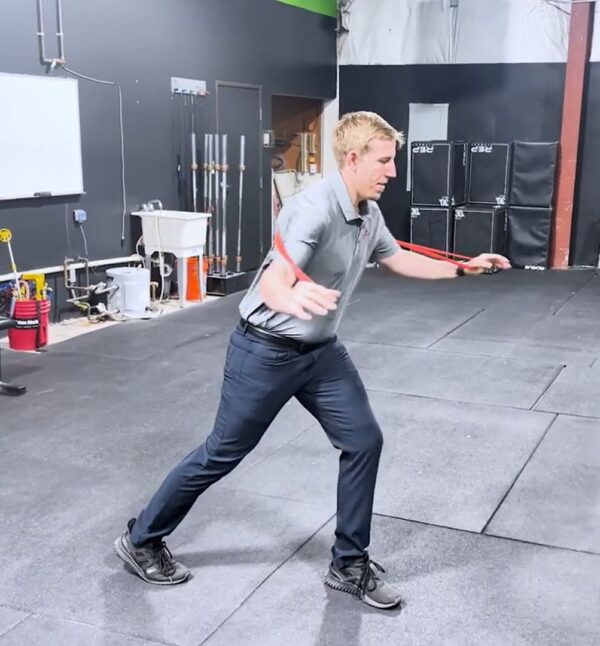
Purpose: Relieves muscle knots in the rhomboids (muscles between the shoulder blades) while improving shoulder blade mobility.
Equipment Needed: Resistance band.
How to Do It
- Place the band underneath your shoulder blades.
- Imagine hugging a tree or a loved one in front of you.
- Reach your arms up and around, allowing your shoulder blades to move up and around.
- Return to the starting position and repeat, moving a little deeper as things loosen up.
Sets: 3 sets of 10 reps.
Tip: Focus on the shoulder blade movement – this puts the rhomboids in a stretched state, which is key for releasing tension.
Exercise 3: Wall Angels

Purpose: Reduces tension in tight pectoral muscles that pull shoulders into a rounded position.
Equipment Needed: Wall
How to Do It
- Stand with your back against the wall, feet slightly forward in a mini-squat position.
- Start with your elbows together in front of your face.
- Open your shoulders and bring your arms back toward the wall until your fingertips touch.
- Return to the starting position.
Sets: 2 sets of 10 reps.
Tip: If you can’t get your fingertips to the wall, that’s totally normal and exactly why you need this exercise. Only go until you feel a stretch in your pecs, then back off.
Advanced Progression: Once fingertips reach the wall, slide your arms up the wall, back down, then return to the starting position while keeping your back flat against the wall.
Will They Work? Yes!
These three exercises are far superior to massage guns, lacrosse balls, and foam rolling because they address the root cause. Soft tissue work provides only temporary relief because muscles continue tightening up when they haven’t been put in a lengthened state. These exercises restore motion and get your body out of “protection mode” by increasing blood flow and teaching muscles to function properly again.
These exercises will give you some relief, but you may need to take further action..
About the Author: Dr. Joey Seyforth


