
How to Fix Bicep Tendonitis FAST: Stop Shoulder Pain with 3 Proven Exercises
Do you feel that sharp, stabbing pain in the front of your shoulder every time you lift, reach overhead, or even try to sleep on that side? Maybe you’ve tried icing it, stretching it, or even taken a complete break from lifting, but it just keeps flaring up like a bad nightmare that refuses to end. If this sounds all too familiar, there’s a good chance you’re dealing with bicep tendonitis. Thankfully, in this article, I shared some exercises to relieve bicep tendonitis fast!
Before we begin, know this!
Most people think bicep tendonitis is simply an inflamed bicep muscle, but that’s only scratching the surface. Your shoulder is an incredibly complex system where everything is interconnected. When one part isn’t working properly, other areas have to compensate – and that’s exactly what’s happening with your bicep tendon.
Here’s what’s really happening.
When your shoulder blade mechanics are poor or your rotator cuff muscles are weak, your bicep tendon has to pick up the slack. It’s like asking one employee to do the work of three people – eventually, they’re going to burn out. This creates a vicious cycle where the bicep tendon becomes overworked, inflamed, and painful.
The good news? You can start relieving this pain and prevent it from coming back with just 10-15 minutes a day using three targeted exercises that address the root cause, not just mask the symptoms.
With just 10-15 minutes daily, you can
- Eliminate sharp shoulder pain during overhead movements and daily activities.
- Sleep comfortably on your affected side again without waking up in pain.
- Return to lifting and sports without fear of re-injury or flare-ups.
- Improve overall shoulder stability and prevent future injuries.
- Regain confident movement in all directions without hesitation.
- Build a stronger foundation that supports long-term shoulder health.
Quick Reference Guide
- Total Time: 10-15 Minutes.
- Targets: Bicep tendon, scapular mechanics, rotator cuff stability.
- Goals: Pain reduction, improved mobility, enhanced shoulder stability.
Confirm You Have Bicep Tendonitis
Before you learn these exercises, try the…
Speed’s Test: Your At-Home Diagnosis Tool

Purpose: Quickly identify if your pain is coming from bicep tendon inflammation. This test helps differentiate bicep tendonitis from other shoulder conditions – if it’s positive, the exercises below will be particularly effective for you.
Equipment Needed: None.
How to Do It
- Extend one arm straight out in front of you with your thumb pointing up.
- Keep your elbow completely locked and straight.
- Use your other hand to press down on the extended arm while you resist the pressure.
- Note any sharp pain at the front of your shoulder.
What It Means: If you feel sharp pain at the front of your shoulder during this test, you likely have bicep tendonitis and need to address the underlying mechanics.
Exercise 1: Wall Slides
Rebuild Your Shoulder’s Natural Movement Pattern
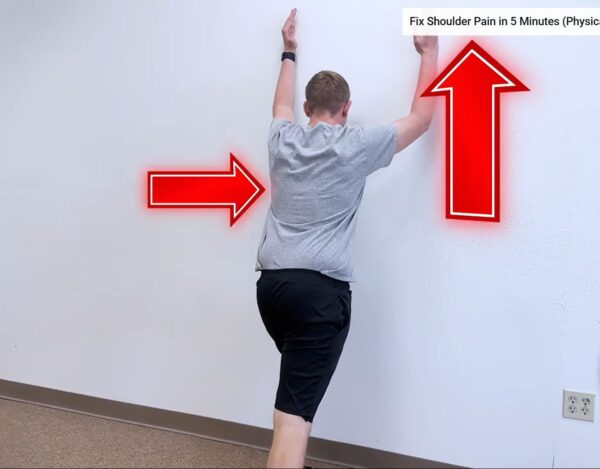
Purpose: Improve scapular upward rotation to take pressure off the bicep tendon while restoring proper overhead mobility.
Equipment Needed: Wall.
How to Do It
- Stand facing a wall in a staggered stance with hands placed at shoulder height.
- Press firmly into the wall and slide your arms up while leaning your chest forward.
- Pause at the top position, feeling your shoulder blades move up and around.
- Slowly return to the starting position with control.
Sets: 2-3 sets of 10-12 reps.
Tip: Focus on slow, deliberate movement – this isn’t about speed but about retraining your shoulder blades to move properly. Many people rush through this exercise and miss the real benefit.
Exercise 2: Banded Open Books
Unlock Your Spine and Shoulder Connection
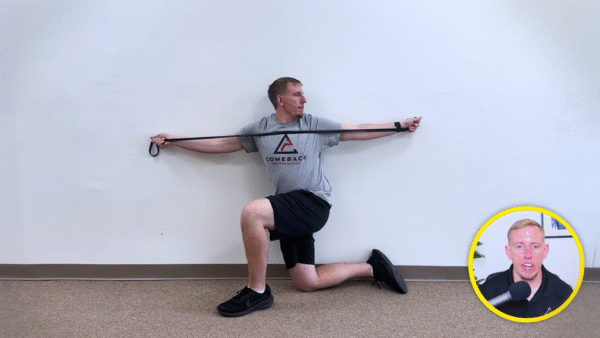
Purpose: Open up thoracic spine mobility and reduce compensation patterns that overload the bicep tendon.
Equipment Needed: Resistance band.
How to Do It
- Get into a half-kneeling position next to a wall with a resistance band in both hands.
- Keep your palms facing up and one hand centered against the wall.
- Open the other arm away from the wall, following your hand with your eyes.
- Hold tension in the band throughout the movement, then return to center.
Sets: 2 sets of 8-10 reps per side.
Tip: Pay attention to which side opens up more easily – asymmetries here often contribute to bicep tendon overuse on the restricted side.
Exercise 3: Banded Uppercuts
Strengthen Your Shoulder’s Support System

Purpose: Build rotator cuff strength and control to provide stability without relying on the bicep tendon.
Equipment Needed: Resistance band.
How to Do It
- Kneel with a resistance band in both hands, elbows at your sides.
- Keep palms facing up and pull the band apart while lifting arms up and outward.
- Stop at eye level, focusing on smooth, controlled movement.
- Slowly lower with complete control, feeling the back of your shoulders working.
Sets: 2-3 sets of 8 reps.
Tip: This should create a burning sensation in the back of your shoulders – that’s your rotator cuff learning to do its job properly instead of letting your bicep tendon take over.
Your Complete Recovery Strategy
Stop the Cycle of Re-injury
The biggest mistake people make is jumping back into heavy lifting the moment they feel slightly better. This is like running on a sprained ankle the day after injury – you’re just setting yourself up for re-injury and chronic problems.
Immediate Action Steps
- Temporarily avoid curls, chin-ups, and overhead pressing that aggravate the tendon.
- Perform the Speed’s test to confirm your diagnosis.
- Complete these three exercises daily for 10-15 minutes.
- Focus on movement quality over speed or intensity.
Build Long-term Shoulder Health
These exercises work by addressing the two fundamental problems behind bicep tendonitis
- Poor scapular mechanics – When your shoulder blade doesn’t move properly, your bicep has to compensate.
- Weak rotator cuff stability – Without proper shoulder joint stability, your bicep tendon will become overworked.
You’re preventing future problems and building a resilient shoulder system by fixing these foundational issues.
Take Control of Your Shoulder Pain Today
Consistency is everything when it comes to lasting relief. These exercises might seem simple, but they’re specifically designed to retrain your shoulder’s movement patterns and build the stability your bicep tendon desperately needs.
Your immediate benefits will include reduced pain during daily activities and better sleep quality. Your long-term gains include a confident return to all activities you love without fear of re-injury.
Consider reaching out to a movement specialist who can provide a personalized assessment and targeted treatment plan if you’ve tried other treatments without lasting relief.
About the Author: Dr. Joey Seyforth


