
3 Nerve Exercises to Relieve Arm Tingling & Numbness FAST
Do you wake up with numb, tingling fingers? Does pain shoot down your arms throughout the day, making simple tasks like typing or lifting difficult? You’re not alone—arm tingling and numbness are among the most common complaints I hear from patients, yet most people are never taught how actually to fix the problem. That persistent tingling in your fingers isn’t just a “pinched nerve” in your wrist. The real culprit often lies much higher up—in your neck and shoulder—where three critical nerves can become trapped and irritated. In this article, I’ve pointed out some nerve exercises you can do for arm tingling and numbness relief.
The nerves in your neck create a domino effect down your entire arm when they become restricted. So, what starts as minor shoulder tension transforms into carpal tunnel-like symptoms, finger numbness. This causes frustrating pins-and-needles sensation that disrupts your sleep and daily activities.
These “nerve glides” work by restoring proper movement to the median, ulnar, and radial nerves—the three main culprits behind your arm pain.
With just 5 minutes a day, you can
- Reduce finger tingling and numbness immediately.
- Improve nerve mobility throughout your entire arm.
- Prevent carpal tunnel symptoms from worsening.
- Sleep better without waking up to shake out numb hands.
- Type and work comfortably for more extended periods.
- Avoid unnecessary surgeries and expensive treatments.
Quick Reference Box
- Total Time: 5 Minutes.
- Targets: Median, ulnar, and radial nerves from neck to fingertips.
- Goals: Restore nerve mobility, reduce pain, and eliminate numbness.
Understanding the 5 Stages of Nerve Damage
Before we dive into the exercises, it’s crucial to understand where you fall on the nerve irritation spectrum.
Stage 1: Moving Pain. Pain that seems to “travel” to different spots in your arm or stays in one consistent location.
Stage 2: Pins and Needles. That familiar tingling sensation, especially when waking up or after staying in one position.
Stage 3: Numbness. Areas of your arm or hand that feel different when touched compared to the other side.
Stage 4: Motor Loss. Visible muscle atrophy or weakness that doesn’t improve with exercise.
Stage 5: Complete Sensation Loss. Total loss of pain or temperature sensation (like diabetic neuropathy).
The goal is to work backward from your current stage to stage 1 and eventually eliminate symptoms.
Exercise Breakdown
Exercise 1: Median Nerve Glide (Carpal Tunnel Relief)

Purpose: Mobilizes the nerve responsible for thumb, pointer, and middle finger sensation.
Equipment Needed: None.
How to Do It
- Start in a “waiter” position with your elbow at your side, palm facing up.
- Slowly extend your elbow, wrist, and fingers down toward the ground.
- Reverse the movement, bringing your arm back to the starting position.
- Advanced version: Add a gentle side bend of your head away from the working arm during the extension phase.
Sets: 10 repetitions, 3 times daily.
Tip: You may feel stretching or tingling from your neck all the way to your fingers—this is normal. Never force the movement through sharp pain.
Exercise 2: Ulnar Nerve Glide (Funny Bone Relief)
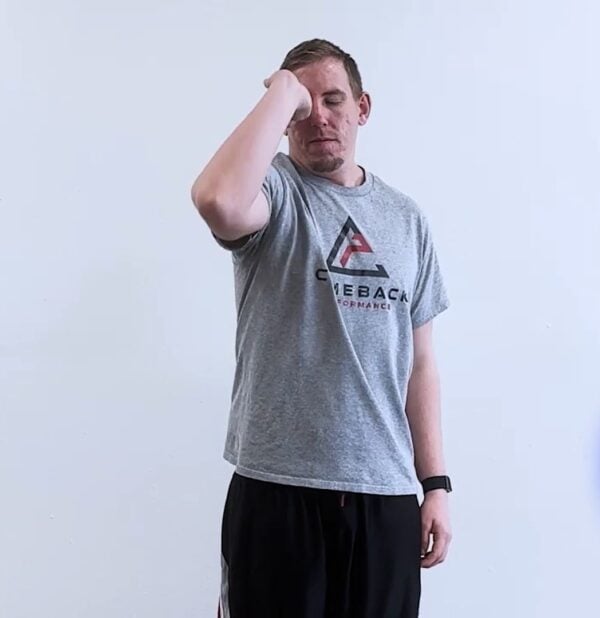
Purpose: Targets the nerve affecting your ring and pinky fingers—the one that causes that “zinging” sensation when you hit your funny bone.
Equipment Needed: None.
How to Do It
- Stand with your arm extended, making an “OK” sign with your hand.
- Flex your elbow while flipping your hand and wrist downward.
- End with your hand on your face, fingers pointing toward the ground.
- Slowly return to the starting position.
Sets: 10 repetitions, 3 times daily.
Tip: This nerve is often why your arms “fall asleep” at night. Start gently—this exercise can create immediate tingling if the nerve is irritated.
Exercise 3: Radial Nerve Glide (Tricep and Back-of-Hand Relief)
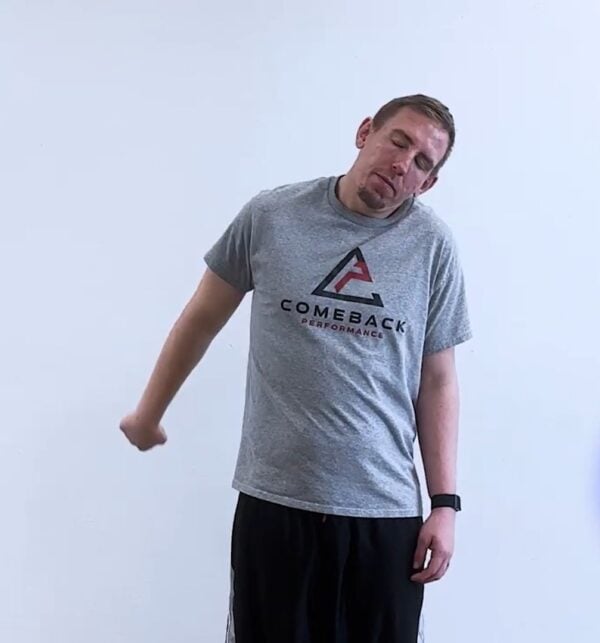
Purpose: Mobilizes the nerve running through your tricep and the back of your hand.
Equipment Needed: None.
How to Do It
- Stand with your arm extended and hand open.
- Make a fist, flex your wrist downward, and bring your arm behind your body.
- Hold for 2-3 seconds, focusing on any sensations in your tricep or wrist.
- Advanced version: Add a gentle head side bend away from the working shoulder.
Sets: 10 repetitions, 3 times daily.
Tip: You may feel stretching in your tricep, wrist extensors, or the back of your hand. This indicates the nerve is being properly mobilized.
The “Kiss the Pain” Principle
Work up to the point where you feel tension or mild discomfort, then back off slightly. You want to “kiss” the pain, not bulldoze through it. Nerves love blood flow. When you rest and avoid movement due to pain, these nerves actually tighten down more, creating a vicious cycle. Regular, gentle movement is essential for nerve health. These are some warning signs to stop
- Sharp, shooting pain
- Significant increase in numbness
- Symptoms lasting more than a few hours after exercise
Why Traditional Physical Therapy Often Fails
Most healthcare providers focus on muscles, joints, and bones while completely ignoring nerve mobility. They’ll have you stretch, get dry needling, or receive a massage, but if your nerves can’t move freely, these treatments only provide temporary relief. These nerve glides address the root cause by restoring proper nerve function from your neck to your fingertips.
While these nerve glides provide excellent immediate relief, they’re just the beginning of a comprehensive solution. Long-term resolution requires
- Postural corrections to prevent nerve re-irritation.
- Specific strengthening for the muscles that support proper nerve positioning.
- Workplace ergonomics to avoid repetitive stress.
- Sleep positioning modifications to prevent nighttime nerve compression.
Take Control of Your Nerve Health Today!
These three nerve glides can provide significant relief, but remember—you’re essentially putting a Band-Aid on the problem if you don’t address the underlying causes. While these exercises will help, true long-term relief requires a comprehensive approach that addresses your specific movement patterns, posture, and daily habits. Perform all three nerve glides 5 times, 3 times daily. Be consistent, be gentle, and listen to your body.
Ready for a permanent solution?
About the Author: Dr. Joey Seyforth


