
The 5-Minute Shoulder Pain Fix and Exercise System for Lifters Over 40
If you’re over 40 and still passionate about lifting, but shoulder pain has you avoiding bench press, skipping overhead movements, or dreading pull-ups and dips, you don’t have to quit lifting. The frustrating truth is that most lifters are treating their shoulder pain all wrong, focusing only on the joint itself while ignoring the interconnected system that actually controls shoulder function.
With what you’re going to learn from this blog, you can identify exactly where your weak links are and start fixing them today without expensive treatments or giving up the gym entirely.
Quick Reference Box
- Total Time: 5 Minutes
- Targets – Neck mobility, thoracic spine rotation, shoulder blade function, joint mechanics, and nerve compression.
- Goals – Pain reduction, movement restoration, and training optimization.
The 5-Test Shoulder Pain Checklist
Test 1: External Rotation Behind the Back
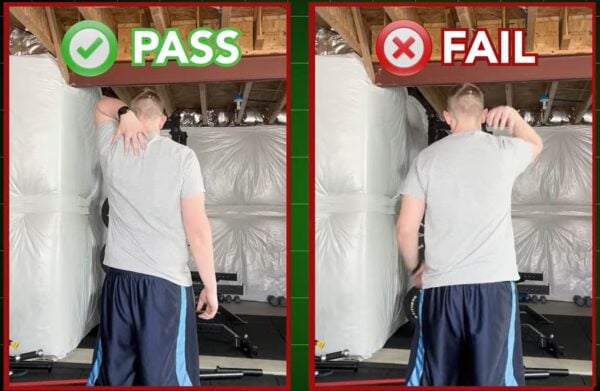
Purpose: Assesses your ability to get into the back squat position and bench press setup
Equipment Needed: None
How to Do It
- Stand tall and reach one hand up above your head.
- Reach back between your shoulder blades as far as possible.
- Note how high you can reach and any symptoms you experience.
- Repeat on the opposite side and score each side 0-10.
Sets: Single test on each side.
Tip: If this movement is severely limited, you’ll likely struggle with back squat bar position, bench press setup, and any throwing movements.
Corrective Exercise: Bench Opener

- Kneel in front of a bench with your elbows placed on the bench surface
- Hold hands together, grasping a dowel or broomstick
- Slowly push your hips back while allowing your chest to drop toward the floor
- Stop before sharp pain and aim for a stretch across the front shoulders and lats
Sets – 2 sets of 10 reps.
Test 2: Internal Rotation “Chicken Wing”
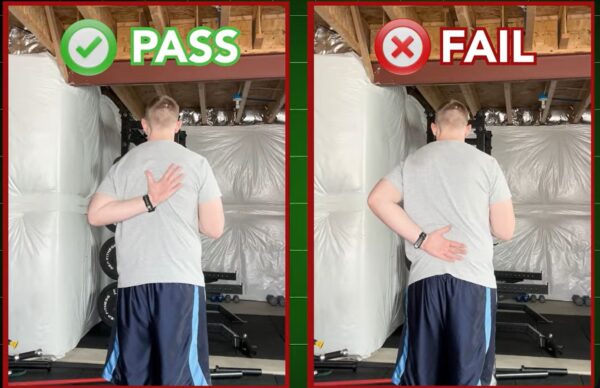
Purpose: Evaluates your capacity for deep dip positions and push-up depth
Equipment Needed: None
How to Do It
- Stand tall and reach your hand behind your back toward your opposite pocket.
- Slide your hand up your back as far as comfortable.
- Note any pain, tightness, or hard stopping points.
- Test both sides and score 0-10.
Sets: Single test each side.
Tip: Poor performance here directly correlates with painful deep dips, limited push-up depth, and certain rowing positions.
Corrective Exercise: Ball Posterior Capsule Mobilization
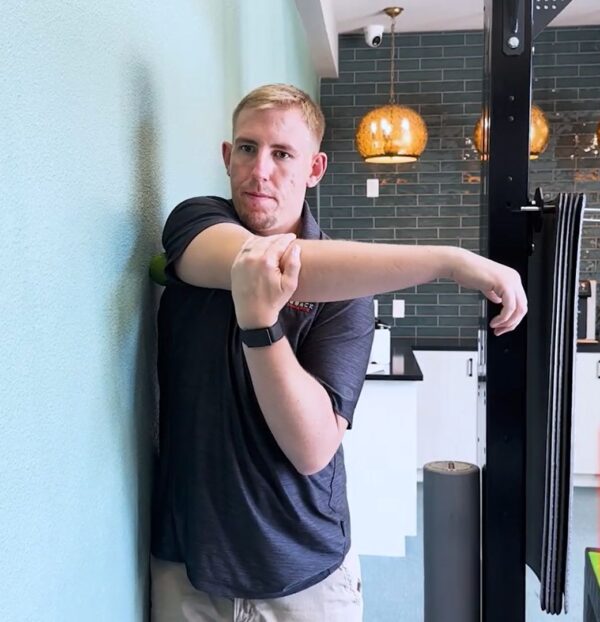
- Stand next to a wall holding a baseball or lacrosse ball.
- Pin the ball between your shoulder blade and the wall.
- Bring your arm across your chest in a stretching motion.
- Focus on mobilizing the back of the shoulder capsule.
Sets – 12 reps each side.
Test 3 – Overhead Reach Assessment
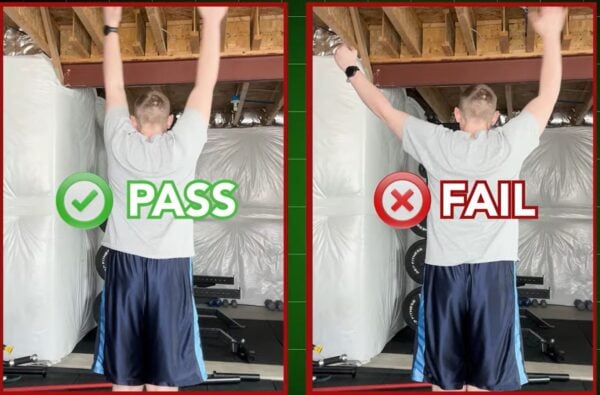
Purpose: Tests overhead pressing capacity and daily reaching activities
Equipment Needed: None
How to Do It
- Flexion Test: Stand tall with thumbs up, raise arms straight forward and overhead without arching your lower back.
- Abduction Test: Start with arms at sides, thumbs up, raise arms out to sides toward a “Y” position overhead.
- Note pinching, tightness, or asymmetries between sides.
- Score both tests 0-10.
Sets: Single test for each movement pattern.
Tip: Pain or limitation here often indicates shoulder blade dysfunction rather than joint problems.
Corrective Exercise – Wall Slides

- Stand facing a wall with one foot slightly forward.
- Place forearms or hands on the wall at shoulder height.
- Gently press into the wall while sliding arms upward.
- Allow the chest to move slightly toward the wall, stopping before sharp pain.
- Slide back down to the starting position.
Sets: 15 reps
Test 4: Median Nerve and Neck Screen
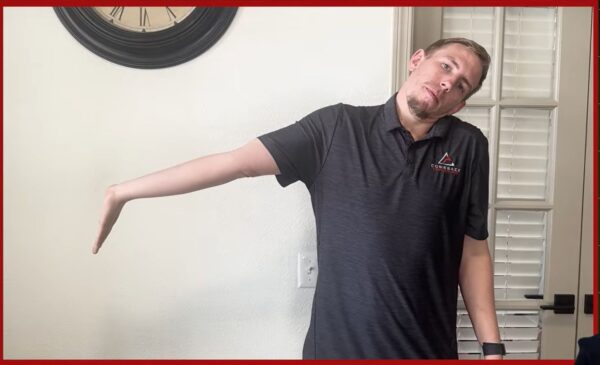
Purpose: Identifies nerve compression causing night pain and exercise-induced symptoms.
Equipment Needed: Belt or dog leash.
How to Do It
- Stand with your arm at your side, bend your elbow bringing your fingers to your shoulder.
- Extend elbow, wrist, and fingers toward the floor.
- Gently tilt the head away from the test arm, then return to center.
- Note tingling, burning, deep stretching, or reproduction of shoulder pain.
- Score 0-10 based on symptom intensity.
Sets – Single test each side.
Tip: Positive findings here often explain mysterious night pain and shooting sensations during pull-ups or pressing movements.
Corrective Exercise: Belt Rib Mobilization

- Loop a belt over your shoulder, sitting on the belt.
- Use both hands to pull downward, creating gentle traction.
- Move your head down and in toward your armpit, then up and away diagonally.
- Focus on unloading the first rib and nerve bundle.
Sets: 10 slow reps each side.
Test 5: Thoracic Spine Rotation Screen
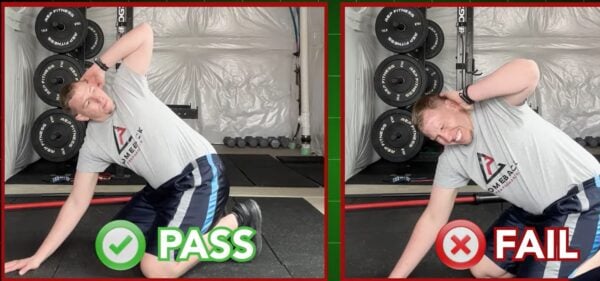
Purpose – Evaluates upper back rotation, critical for all lifting and sports movements.
Equipment Needed: Light resistance band.
How to Do It
- Get into a hands-and-knees position.
- Rock hips back toward feet slightly.
- Place one hand on your head and rotate up and away as far as possible.
- Compare rotation capacity between sides and note stiffness or pain.
- Score right and left sides 0-10.
Sets: Single test each direction.
Tip: Limited T-spine rotation forces compensatory movement from the shoulder, leading to impingement and pain.
Corrective Exercise – Banded Wall Open Book
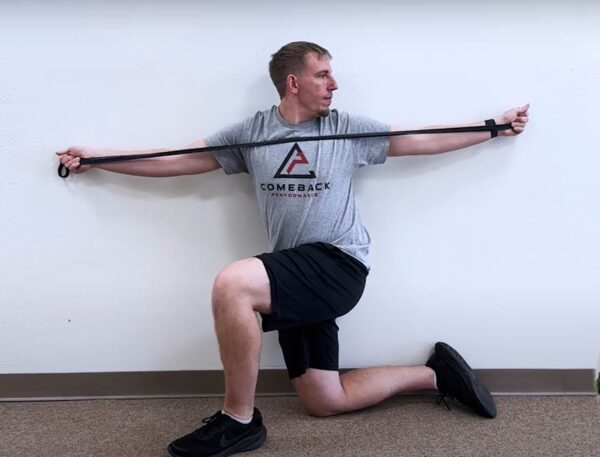
- Anchor a light band at chest height next to a wall.
- Kneel beside the wall, holding the band with both hands, arms straight.
- Keep your hips connected to the wall, and maintain one hand against the wall.
- Rotate the other arm away from the wall, following with your eyes.
- Pause at the end range, then return slowly.
Sets: 8-10 slow reps each side.
Your Shoulder Comeback Starts Today
The beauty of this assessment system lies in its specificity—you now know exactly where your weaknesses are instead of guessing or following generic protocols. You can finally break free from the cycle of flare-ups and return to confident, pain-free lifting by addressing your neck, thoracic spine, shoulder blade, joint mechanics, and nerve function as an integrated system.
About the Author: Dr. Joey Seyforth


