
Your Guide to Shoulder Pain Management: The Traffic Light System for Better Results
Do you struggle with shoulder pain and feel like you’re trapped in an endless cycle? You’re doing well for a few days, then you try one simple activity—reaching for something overhead, sleeping wrong, or attempting a workout—and BAM! Your shoulder flares up again. You rest, ice it, maybe get an injection, but when you return to normal activities, the pain comes roaring back.
This frustrating pattern is what I call the “shoulder pain roller coaster,” and it happens because the root cause isn’t being addressed. Understanding how pain actually works and implementing a simple shoulder pain traffic light system for exercise can help you break this cycle and regain control of your shoulder health.
With just 5 minutes a day using the traffic light system, you can
- Reduce the frequency and intensity of shoulder pain flare-ups.
- Sleep better by avoiding activities that spike your nervous system.
- Gradually return to activities you love without fear.
- Build confidence in your body’s ability to heal.
- Stop the endless cycle of rest-flare up-rest-flare up.
- Develop a personalized approach to managing your pain levels.
Quick Reference Guide
- Total Time: 5 minutes daily for self-monitoring
- Targets: Shoulder pain management, nervous system regulation
- Goals: Pain level awareness, activity modification, flare-up prevention
Exercise 1: Establishing Your Baseline
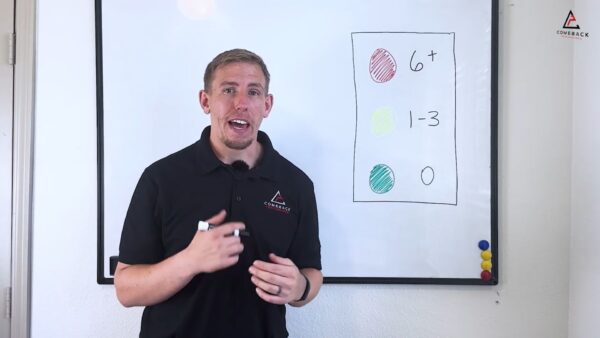
Purpose: Determine your current pain ceiling to set appropriate boundaries.
Equipment Needed: Pain scale reference (0-10)
How to Do It
- Think about the highest pain level you’ve experienced in the past 2-3 weeks.
- Rate this pain on a scale of 0-10 (0 = no pain, 10 = worst pain imaginable).
- Write this number down as your “baseline ceiling”.
- Use this number as your reference point for the traffic light system.
Sets: Assess once daily for one week to establish a consistent baseline.
Tip: Be honest about your pain levels—underestimating will lead to setbacks, while overestimating will keep you unnecessarily limited.
Exercise 2: Red Light Activities (Stop Zone)
Purpose: Identify activities that spike your nervous system and create lasting flare-ups.
Equipment Needed: Activity log or smartphone notes.
How to Do It
- Monitor any activity that brings your pain to your baseline ceiling or higher.
- Immediately stop or modify the activity when you hit this level.
- Note what specific movement, position, or exercise triggered the red zone.
- Plan modifications for future attempts at this activity.
Sets: Apply throughout the day as needed.
Tip: Red zone pain puts you in fight-or-flight mode, elevating stress hormones and disrupting sleep—this is counterproductive to healing.
Exercise 3: Yellow Light Activities (Caution Zone)
Purpose: Learn to modify activities to stay in the manageable pain range.
Equipment Needed: None
How to Do It
- Engage in activities that create 1-3/10 pain levels.
- If pain starts climbing toward 4-5/10, immediately modify by reducing intensity, weight, or duration.
- Monitor how you feel that evening and the next morning.
- Adjust future sessions based on delayed responses.
Sets: This becomes your primary operating zone for daily activities.
Tip: Yellow zone activities are generally safe and won’t spike your nervous system, but constantly monitor the delayed response 6-24 hours later.
Exercise 4: Green Light Activities (Go Zone)
Purpose: Gradually expand your activity tolerance when pain levels are minimal.
Equipment Needed: None
How to Do It
- When experiencing 0-1/10 pain, cautiously try slightly more challenging activities.
- Increase intensity, duration, or complexity by small increments (10-20%).
- Continue monitoring during and after the activity.
- Build confidence through successful experiences.
Sets: Use green light opportunities 2-3 times per week.
Tip: Green doesn’t mean “go crazy”—if you haven’t done an activity in months, start with very light versions before progressing.
Exercise 5: Daily Pain Monitoring
Purpose: Track patterns and responses to build better pain management strategies.
Equipment Needed: Simple tracking method (phone app, journal, or chart).
How to Do It
- Check in with your pain levels 3 times daily (morning, afternoon, evening).
- Note your pain level and any activities that influenced it.
- Rate your sleep quality and stress levels.
- Look for patterns between activities, pain levels, and recovery.
Sets: Daily for at least 2-4 weeks to establish patterns.
Tip: Focus on trends over individual days—some fluctuation is expected.
Understanding Your Pain Traffic Light System
Pain isn’t an accurate measure of tissue health—it’s a protective warning signal from your brain. Sometimes this system becomes overprotective, creating unnecessary warning signals that keep you stuck in a cycle of fear and avoidance. Research shows that pain is influenced by many factors beyond tissue damage, including
- Your thoughts and beliefs about the pain.
- Past experiences and conditioning.
- Stress levels and sleep quality.
- Environmental factors and mood.
- Your nervous system’s learned responses.
The longer your nervous system produces pain, the better it gets at making it. This is why some people experience pain that spreads, comes on without warning, or seems disproportionate to the actual tissue damage.
Breaking Free from the Pain Cycle
The traffic light system is about retraining your pain system to be less overprotective. You’ll teach your nervous system that movement is safe and reduce the likelihood of future flare-ups by consistently staying in the yellow and green zones. This system addresses much more than just shoulder mechanics. Poor sleep, high stress, negative beliefs about pain, and other lifestyle factors all contribute to your pain experience. The more factors you can optimize—nutrition, stress management, sleep quality, and movement patterns—the less shoulder pain you’ll experience overall.
However, while the traffic light system is an excellent self-management tool, addressing the root cause of your shoulder pain requires a targeted approach. Schedule a one-on-one online shoulder assessment to identify the root cause of your pain and develop a specific game plan for long-term relief.
About the Author: Dr. Joey Seyforth


