
Say Goodbye to Shoulder Pain: 5 Simple Exercises to Fix Shoulder Impingement
If you’re experiencing that sharp, pinching pain in your shoulder every time you reach overhead or across your body, you’re not alone. Shoulder impingement is one of the most common causes of shoulder pain, making simple daily tasks like reaching for a cup on a high shelf or putting on a jacket feel impossible.
While the pain might feel isolated to your shoulder, the truth is that shoulder impingement involves multiple interconnected systems. Your rotator cuff tendons, thoracic spine mobility, and even your posture all play crucial roles in shoulder health.
When your rotator cuff muscles weaken, the ball-and-socket joint loses its stability, causing it to shift forward or upward. This creates a domino effect: your shoulder blade compensates, your upper back stiffens, and your chest muscles tighten – all contributing to that painful pinching sensation.
The good news? With just 15-20 minutes a day and these 5 targeted exercises, you can start feeling relief within days while building the foundation for long-term shoulder health.
Quick Reference Box
- Total Time: 15-20 Minutes
- Targets: Rotator cuff, chest, thoracic spine, mid/lower trapezius
- Goals: Pain reduction, improved mobility, enhanced shoulder stability
Exercise Breakdown
Exercise 1: Doorway Stretch
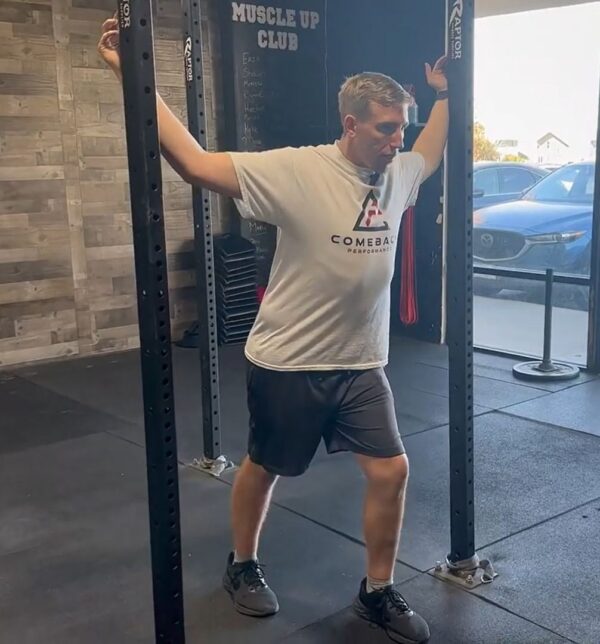
Purpose: Opens up tight chest muscles that pull the shoulder forward into impingement position.
Equipment Needed: Doorway or wall
How to Do It
- Stand in a doorway with your arm at 90 degrees, palm flat against the door frame.
- Step forward slowly until you feel a stretch across your chest and front shoulder.
- Hold for 2-3 seconds, then step back to release.
- For a deeper stretch, try both arms simultaneously if the doorway is wide enough.
Sets: 2-3 sets of 10 reps.
Tip: Never push through pain – you should feel a gentle stretch, not sharp discomfort
Exercise 2: Wall Open Books

Purpose: Improves thoracic spine rotation to reduce stress on the shoulder joint.
Equipment Needed: Wall
How to Do It
- Kneel sideways against a wall in a half-kneeling position with your hip touching the wall.
- Place your hands together in front of you.
- Keeping your eyes on your hand, slowly rotate your top arm open like a book.
- Return to the starting position with control.
Sets: 2 sets of 10 reps per side.
Tip: Focus on rotating through your upper back, not forcing the shoulder movement
Exercise 3: Prone I’s
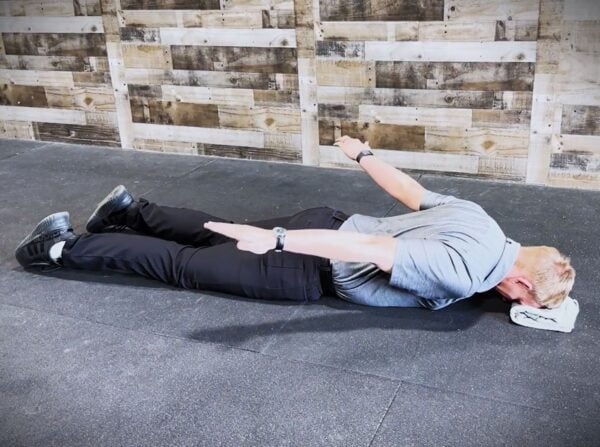
Purpose: Strengthens the lower trapezius muscles to support proper shoulder blade positioning.
Equipment Needed: None (optional: light weights)
How to Do It
- Lie face down with arms by your sides, palms facing up.
- Relax your neck completely.
- Lift your arms straight up toward the ceiling, squeezing between your shoulder blades.
- Hold for 2-3 seconds, then lower slowly.
Sets: 2 sets of 10 reps with 2-3 second holds.
Tip: You should feel the muscles between and below your shoulder blades working, not your neck.
Exercise 4: Prone T’s
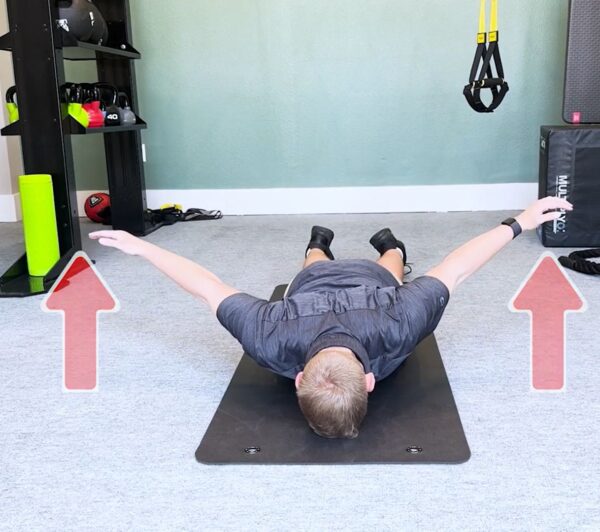
Purpose: Targets the middle trapezius to improve shoulder blade stability.
Equipment Needed: None (optional: light weights).
How to Do It
- Lie face down with arms extended to the sides at 90 degrees.
- Keep your neck relaxed and forehead resting.
- Lift your arms straight up, focusing on squeezing your shoulder blades together.
- Hold for 2-3 seconds before lowering.
Sets: 2 sets of 10 reps with 2-3 second holds.
Tip: Imagine pinching a pencil between your shoulder blades as you lift.
Exercise 5: Banded External Rotation

Purpose: Directly strengthens the rotator cuff muscles responsible for shoulder stability.
Equipment Needed: Resistance band, small towel, or pillow.
How to Do It
- Place a towel under your armpit and hold a resistance band with your elbow at 90 degrees.
- Keep your elbow tucked to your side (towel helps maintain position).
- Rotate your forearm outward against the band’s resistance.
- Slowly return to the starting position with control.
Sets: 3 sets of 10 reps on each side.
Tip: Maintain good posture throughout – avoid letting your shoulder roll forward.
It’s Worth Doing!
These exercises work by gradually restoring balance to your shoulder complex, so daily practice is essential. Although these exercises can be helpful they are not the full solution to shoulder pain. Consider scheduling a consultation with a physical therapist who specializes in shoulder rehabilitation if you’re dealing with chronic shoulder pain and want personalized guidance to fix it for good.
About the Author: Dr. Joey Seyforth


