
Biceps Tendonitis Vs Nerve Pain: 2 Tests and 3 Exercises to Deal With It
Someone told you it’s bicep tendonitis. Since then, everything has gone to that one tendon. You rested it, stretched it and foam-rolled it. You went to physical therapy for shoulder pain and did the banded strengthening you were given. And it’s still there, right in the groove at the front of your shoulder. It hurts when you curl, when you press, and every time you lift something away from your body.
Here’s something you should know: pain at the front of the shoulder has more than one possible cause, and one of them isn’t a tendon at all. Telling bicep tendonitis apart from nerve pain is the step most people skip, and it’s often why nothing has worked.
Quick Reference Guide
- Total Time: 10–15 Minutes
- Targets: Median Nerve, Shoulder Blade, Rotator Cuff, Core
- Goals: Screen the Real Cause, Reduce Front Shoulder Pain, Build Stability Under Load
The 2 Screening Tests
Test 1: Speed’s Test

This one checks the tendon itself.
- Hold your arm straight out in front of you at about 90°, palm up, elbow locked.
- Use your other hand to press down on it while you resist.
- Notice whether you feel a sharp, familiar pain in the groove at the front of the shoulder. General arm fatigue doesn’t count.
If you get that sharp, familiar pain, the tendon is involved.
Test 2: Median Nerve Tension Test
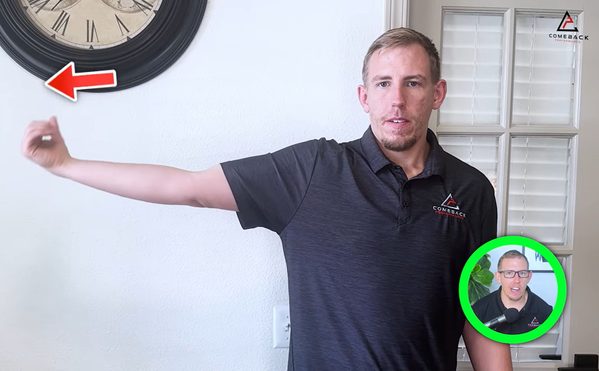
Healthcare providers rarely screen for this one.
- Start in a “teapot” position, then straighten your elbow and extend your wrist and fingers, pointing them toward the ground.
- Notice any pull along the front of your arm, into your bicep, down into your fingers, or anywhere from your fingers up to your neck. That includes pain, tightness, restriction or tingling.
- Progress it by bringing your ear toward your opposite shoulder and holding.
- Repeat on the other side and compare.
If your symptoms change in location or intensity, or one side feels very different from the other, the median nerve may be involved. Remember that you’re looking for more than pain here. Tightness, restriction and pulling all count. And if it is the nerve, no amount of stretching the tendon was ever going to fix it.
3 Exercises to Address the Real Cause
Exercise 1: Median Nerve Glide

Purpose: To get the median nerve gliding freely from the neck down to the fingers.
Equipment Needed: None
How to Do It:
- Start in the same teapot position as the test.
- Straighten your elbow and extend your wrist and fingers down toward the floor.
- Leave the neck movement out for now. That comes in the next progression.
- Return to the start and repeat smoothly.
Sets: 2 sets of 10 on both sides.
Tip: You should feel a mild stretch, never sharp pain. Back off if it gets sharp; afterward, check how your bicep feels.
Exercise 2: Banded Scap Angel
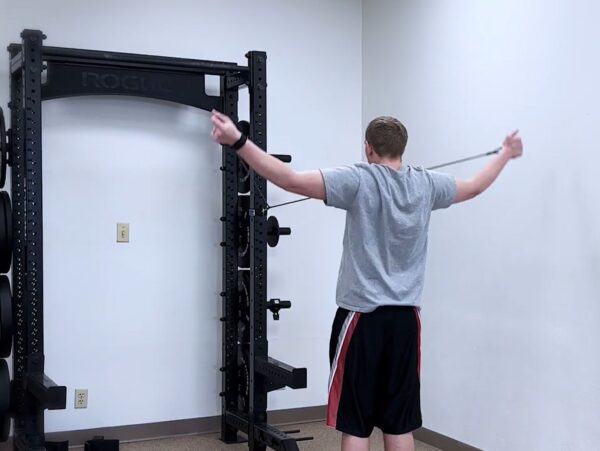
Purpose: To teach your shoulder blade to move up and around your ribs instead of getting stuck and jamming the front of the joint, right where the tendon sits.
Equipment Needed: Light Resistance Band
How to Do It:
- Anchor a light band in front of you at about chest height. Hold it with both hands, elbows straight, and step back until you feel light tension.
- Bring your hands down toward your pockets.
- Slowly sweep your arms up and out wide until your biceps are by your ears.
- Return down with control.
Sets: 2 sets of 10–12 slow reps.
Tip: Think about your shoulder blades tipping back and rotating up. Keep your ribs down, and don’t arch your low back to fake the range.
Exercise 3: Kettlebell Pull-Through
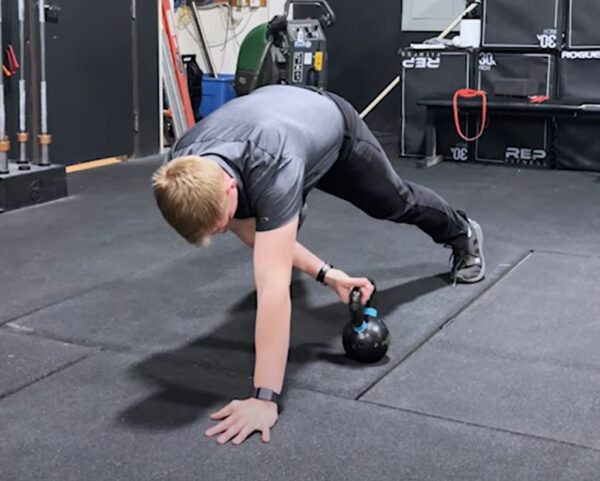
Purpose: To build core and shoulder stability together, so the new mechanics hold up under real demand.
Equipment Needed: Kettlebell
How to Do It:
- Get into a high plank with your hands on the floor and your feet spread wide for balance.
- Place a kettlebell just outside one hand.
- Reach under your body with the opposite hand, grab the kettlebell, and pull it across to the other side.
- Keep tension through your whole trunk.
Sets: 2 sets of 8 pull-throughs in each direction.
Tip: Don’t let your hips and low back rock. This one carries straight over to pressing, push-ups, and anything else you do with your hand planted. When you’re done, retest. Redo Speed’s test and the median nerve tension test and compare them to where you started. Any change gives you useful information.
Building a Shoulder That Stays Pain-Free
Often the problem isn’t a lack of effort with your exercises for shoulder pain. It’s not understanding the other triggers or how to modify and progress the exercises properly. Figuring out bicep tendonitis vs. nerve pain is crucial to building a plan that targets the root cause. Stop guessing and start building a shoulder recovery plan that fits your shoulder.
About the Author: Dr. Joey Seyforth


