
Struggling With Shoulder Pain? This 3-Step Fix Could Change Everything
Shoulder pain can feel like it’s stealing your freedom, making simple things like reaching overhead, lifting groceries, or even sleeping through the night a real struggle. If that’s your experience, these simple shoulder blade exercises for shoulder pain relief will make a difference when you do them correctly.
Here’s what most people don’t realize: Your shoulder pain isn’t just about your shoulder. The real culprit is often your shoulder blade. When your shoulder blade doesn’t move properly, it creates a domino effect that traps your shoulder joint, leading to painful impingement and inflammation.
The good news? There’s a simple three-step system that addresses the root cause of shoulder pain by resetting your joint position, mobilizing your shoulder blades, and building true stability. This isn’t another band-aid solution; it’s a comprehensive approach that targets the entire shoulder complex.
With just 15 minutes a day, you can
- Instantly reduce shoulder impingement and create more space in the joint
- Restore natural shoulder blade movement that’s been locked up for months or years
- Eliminate morning stiffness and wake up pain-free
- Reach overhead without wincing – grab items from high shelves again
- Sleep through the night without rolling onto your painful shoulder
- Build lasting stability that prevents future injuries
Quick Reference Guide
- Total Time: 15 Minutes.
- Targets: Shoulder joint, shoulder blades, rotator cuff muscles.
- Goals: Joint reset, improved mobility, enhanced stability.
Why Traditional Approaches Fall Short
Your shoulder is a ball-and-socket joint that needs to rotate correctly. When your shoulder blade doesn’t rotate upward properly (to about 60 degrees), the ball of your shoulder gets compressed between the shoulder and the shoulder blade. This creates impingement – the painful pinching sensation you feel when reaching overhead.
Most treatments focus only on the shoulder joint itself, but the real problem starts with your shoulder blade. When we get your shoulder blade moving correctly, we eliminate the compression and allow your arm to move freely in all directions.
Exercise 1: Banded Posterior Shoulder Mobilization
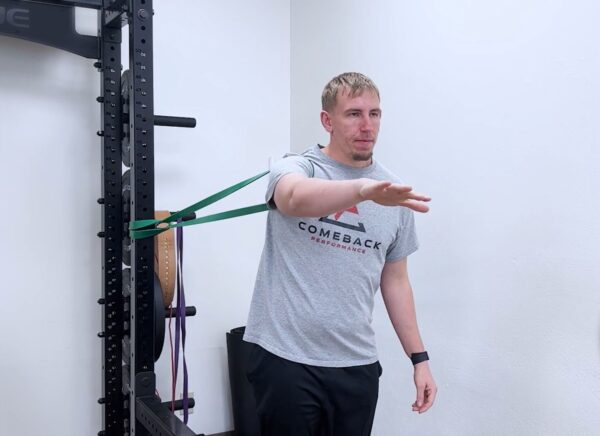
Purpose: Reset your shoulder joint position and create instant space
Equipment Needed: Resistance band
How to Do It
- Loop the resistance band around the front of your affected shoulder
- Step back to create tension in the band.
- Gently move your arm in a chest press motion, allowing the band to pull your shoulder back into proper position
- Focus on feeling the stretch and space being created in the front of your shoulder
Sets: 2 sets of 15 reps
Tip: Don’t force the movement – let the band do the work of pulling your shoulder back into alignment. You should feel immediate relief as space is created in the joint.
Exercise 2: Wall Slides
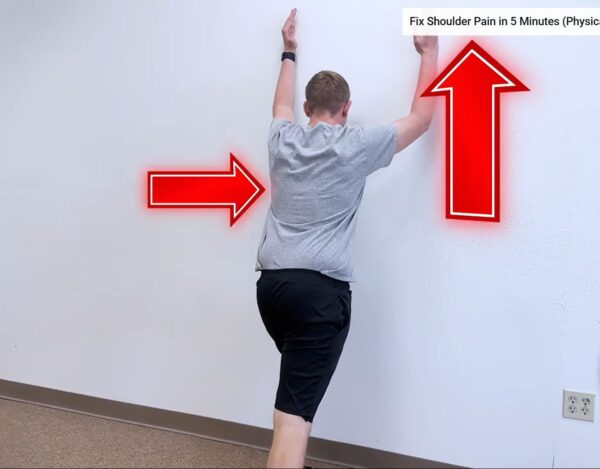
Purpose: Mobilize stuck shoulder blades and restore natural movement patterns.
Equipment Needed: Wall.
How to Do It
- Stand facing a wall with one foot in front of the other.
- Place both hands flat against the wall at shoulder height.
- Slowly slide your arms upward while leaning your chest forward at the top
- Focus on feeling your shoulder blades moving up and around your ribcage
Sets: 2 sets of 10 controlled reps
Tip: This exercise should feel like a gentle stretch, not painful. If you feel pinching, reduce your range of motion and focus on the quality of movement rather than how high you can reach.
Exercise 3: Banded Cheerleader

Purpose: Build true stability by teaching your rotator cuff and shoulder blade muscles to work together.
Equipment Needed: Resistance band
How to Do It
- Hold a resistance band with both hands and your palms facing up, arms straight ahead.
- Pull the band apart horizontally, keeping your elbows straight
- Return to center, then move into a diagonal pattern – one arm down and left, the other up and right.
- Return to the center and repeat the diagonal in the opposite direction.
Sets: 2 sets of 5 reps (three directions count as one rep)
Tip: Focus on control rather than speed. Your goal is to teach your small stabilizing muscles to coordinate properly, which takes time and precision.
Your Path to Lasting Shoulder Relief
The immediate benefits of this three-step system are remarkable. Like many others, if you do these exercises right, you will notice reduced pain and increased range of motion within just a few days of consistent practice. You’ll likely notice that reaching overhead becomes easier, sleeping is more comfortable, and daily activities no longer trigger sharp pain.
Do your best to be consistent if you want to see results. Ideally, you should commit to these exercises daily for the next two weeks. If you do, you’ll be amazed at how much your shoulder function will improve. It’s also important to keep in mind that while these exercises can provide significant relief, they’re not a complete long-term solution for chronic shoulder pain. A proper movement assessment by a qualified professional helps you to identify and address the root cause of your specific condition.
Ready to take the next step?
About the Author: Dr. Joey Seyforth


