
Tight Neck and Shoulders? 2 Gentle Exercises That Reach the Real Cause
Many people have experienced shoulder discomfort at one point in their lives. It starts as a tight, aching band across the top of your shoulder that creeps up into the side of your neck. It builds through the workday and sometimes gets worse after a long drive. Some mornings, you wake up, and it’s already there.
So you do what most people do. You stretch your upper traps, pull your arm across your body, dig into the spot with a lacrosse ball, maybe crack your neck. It feels better for about 20 minutes. Then it’s right back.
Here’s the reason: your shoulder isn’t the problem. It’s the part paying for it. In this guide, you’ll check your starting point, learn why the tension keeps coming back, and try two gentle exercises for neck and shoulder tension.
Quick Reference Guide
- Total Time: 2 minutes.
- Targets: Neck, first rib, nerves, upper back (thoracic spine).
- Goals: To reduce neck and shoulder tension, restore upper back rotation, and help the shoulder move freely.
Check Your Starting Point First
Do these two quick checks before the exercises so you have something to compare against. You’ll repeat them at the end.
Check 1: Head Turn
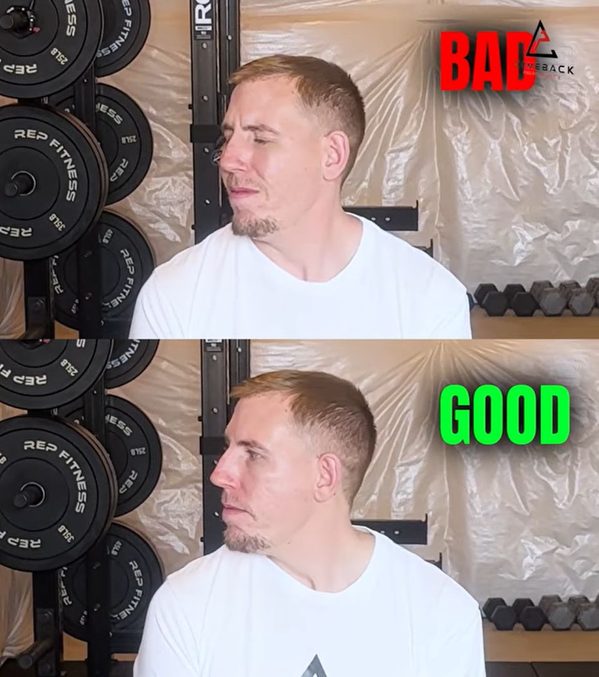
- Turn your head all the way to the left.
- Then all the way to the right.
- Notice whether one side goes further, and whether you feel a pull or that familiar shoulder tension.
Check 2: Arms Overhead
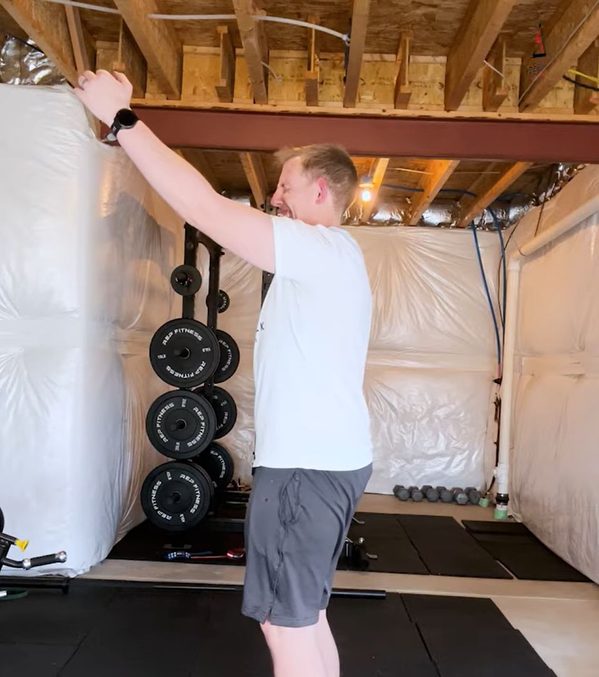
- Raise both arms overhead.
- Notice any stiffness.
- Check whether either shoulder hikes up, and whether one side feels more restricted.
Remember what you found. You’ll need it shortly.
The 2 Exercises for Neck and Shoulder Tension
Exercise 1: Belt First Rib Mobilization

Purpose: To take pressure off the first rib and upper nerve area that drives stubborn neck and shoulder tension.
Equipment Needed: A belt or long strap
How to Do It
- Loop the belt over the top of your painful shoulder so it sits just above your collarbone.
- Angle the strap down across your body to your opposite hip and hold it with tension pulling down.
- Bring your head down and in toward your targeted side, as if you’re sniffing your armpit.
- Then look up and away. You should feel a pull in your neck and trap.
Sets: 2 sets of 8–10 slow reps
Tip: A gentle stretch across the top of your shoulder and side of your neck is fine.
Exercise 2: Wall Open Book

Purpose: To restore rotation in your upper back so your shoulder doesn’t have to steal the motion.
Equipment Needed: A wall
How to Do It
- Get into a half-kneeling position next to a wall, with your hip touching it.
- Press your hands together straight out in front of you.
- Rotate your top arm away from the wall, following your hand with your eyes.
- Go only as far as you comfortably can, then return to the start.
Sets: 2 sets of 8–10 reps per side
Tip: Notice if one side rotates more than the other. That difference is often a big contributor to the problem.
Retest and Feel the Difference
Go back to both checks and turn your head left and right. Does it go further? Is the pull less? Then raise your arms overhead and compare the range, the hiking, and the stiffness. Two exercises. Two minutes. And no pointless stretching.
Do these moves at your desk, after driving, in the morning, or in the evening. The timing doesn’t matter. Mixing them in a couple of times throughout the day is what makes the difference.
Get Lasting Shoulder Pain Relief
Let’s be real: two exercises can’t address every cause of neck and shoulder pain. But they hit the two areas that are most often ignored, and for many people, that alone changes how the whole upper body feels.
After working with thousands of shoulders, we’ve learned that each one has its own unique presentation and needs a specific plan for long-term results. If you’re ready to turn your head, reach overhead, work, and drive without that constant band of tension, it’s time for a plan that actually matches your shoulder.
About the Author: Dr. Joey Seyforth


